
Government Created Debanking
Banks want customers. Regulators give them reasons to turn lawful Americans away.
Hi Friends!
Debanking is back in the news, but the conversation often starts in the wrong place. When banks close accounts or deny services to lawful individuals and businesses, many assume the problem is politically motivated banks.
That misses the bigger story.
The primary driver of debanking is not free markets. It is a regulatory system that changes the incentives banks face, making some lawful customers more costly and risky to serve.

Government created those incentives, and banks responded.
Banks Respond to Incentives
Banks generally do not make money by turning away good customers. They earn profits by attracting deposits, making loans, processing payments, and building long-term relationships. In a competitive market, every lawful customer represents an opportunity to grow.
That changes when regulators make serving certain customers expensive or risky.
The Bank Secrecy Act, expansive anti-money-laundering requirements, and years of subjective supervisory guidance have steadily increased compliance costs.
Regulators rarely need to order a bank to close an account. The possibility of a poor examination, enforcement action, or additional scrutiny is often enough.
Banks respond exactly as economics predicts. They “de-risk” by closing accounts, limiting services, or avoiding entire categories of lawful customers.
The Lesson of Operation Choke Point
The clearest example was Operation Choke Point, launched by the Obama administration in 2013 through the Department of Justice in coordination with federal banking regulators, particularly the Federal Deposit Insurance Corporation.
Its stated purpose was to combat consumer fraud by targeting banks serving fraudulent merchants. In practice, regulators pressured banks to distance themselves from lawful businesses considered “high risk,” including firearms dealers, payday lenders, coin dealers, and other politically controversial industries.
A House Oversight Committee investigation concluded that regulators relied on supervisory pressure and vague “reputational risk” concerns to discourage banks from serving legal businesses.
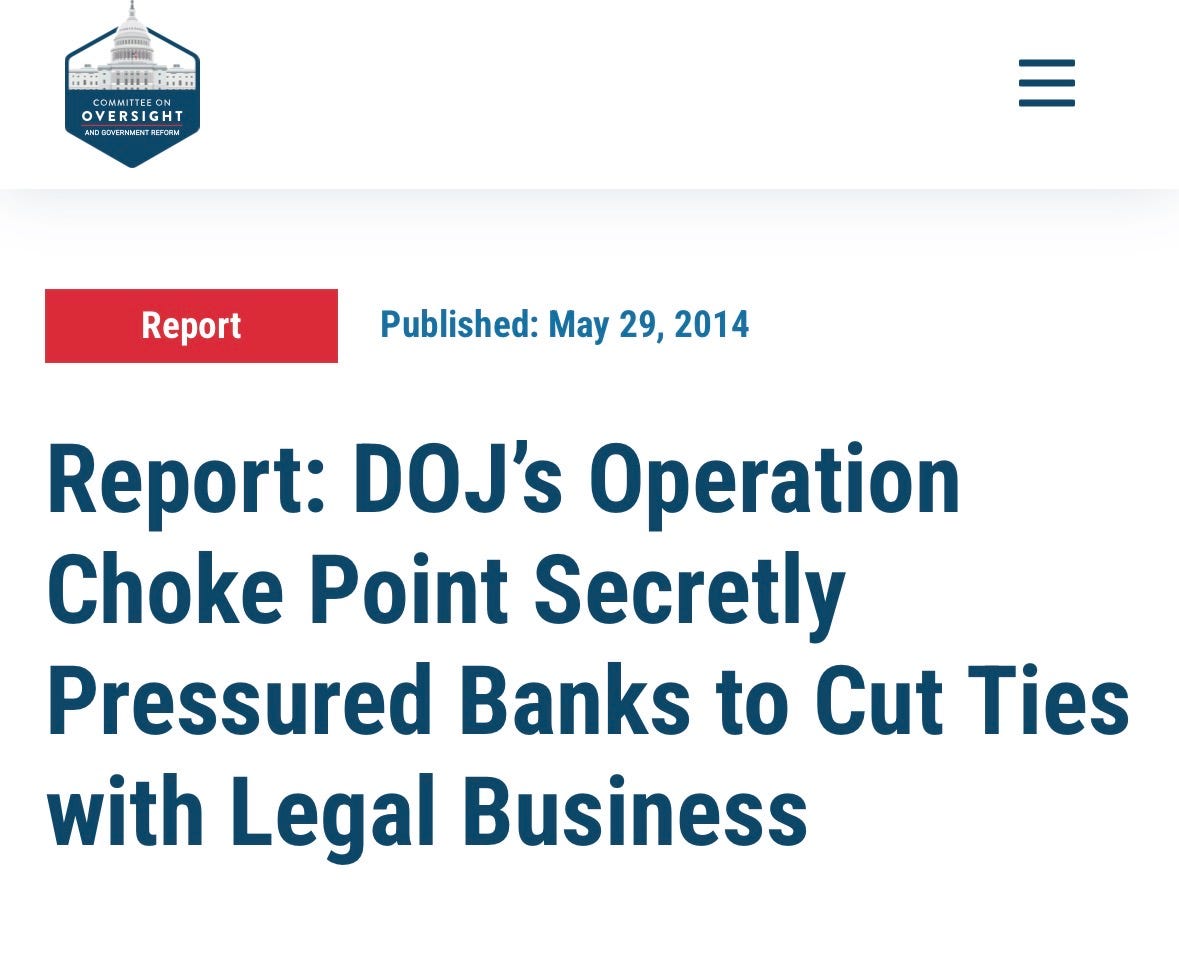
Government did not have to outlaw these industries. It simply made them too costly or risky for many banks to serve.
The Problem Is Not the Market
A bank may technically make the final decision to close an account, but decisions made under regulatory pressure are not fully market-driven.
When every bank faces similar compliance burdens and supervisory expectations, competition cannot work as intended. Community banks are hit especially hard because they lack the scale to absorb growing compliance costs.
The result is fewer choices, less competition, and greater concentration in the financial system.
Federal regulators have begun recognizing the damage by moving away from subjective reputational-risk supervision. The FDIC and Office of the Comptroller of the Currency have also acted to restrict its use.
That is progress, but informal examination pressure and excessive compliance burdens can still produce the same harmful incentives.
A recent Wall Street Journal piece highlights the latest irony: banks may now face legal exposure for decisions made while responding to regulatory pressure Washington itself encouraged.
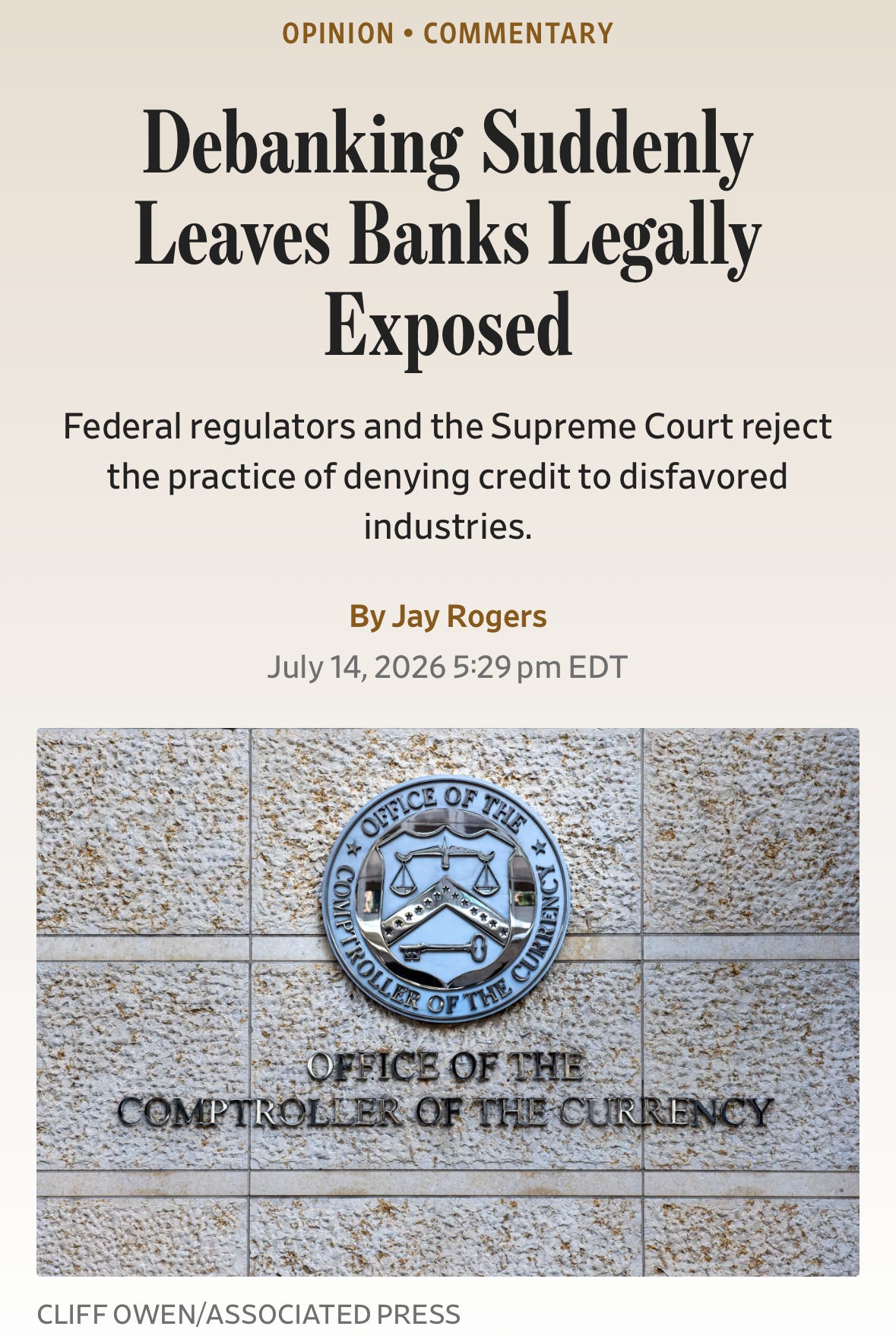
Government distorted the incentives. Banks responded. Now banks may be left holding the liability.
Let Markets Work
The answer is not another government mandate telling banks whom they must serve. That would replace one political distortion with another and move banking closer to a government-controlled utility.

Policymakers should instead narrow supervisory discretion, simplify AML compliance, establish objective examination standards, strengthen due process, and hold regulators accountable when they pressure banks to deny services for lawful activities.
The economic lesson is simple: people and institutions respond to incentives.
When Washington makes lawful customers costly to serve, banks will naturally serve fewer of them. Remove those distortions, and competition encourages banks to expand access, innovate, and earn trust by serving more customers.
Government created the incentives behind much of today’s debanking. Government can also remove them. The answer is less political control, clearer rules, and more competition.
Thank you for reading and sharing. Please subscribe, share this post, and join the conversation.
God bless you, and let people prosper!
Vance Ginn, Ph.D., President, Ginn Economic Consulting