
Inflation Was Never Gone
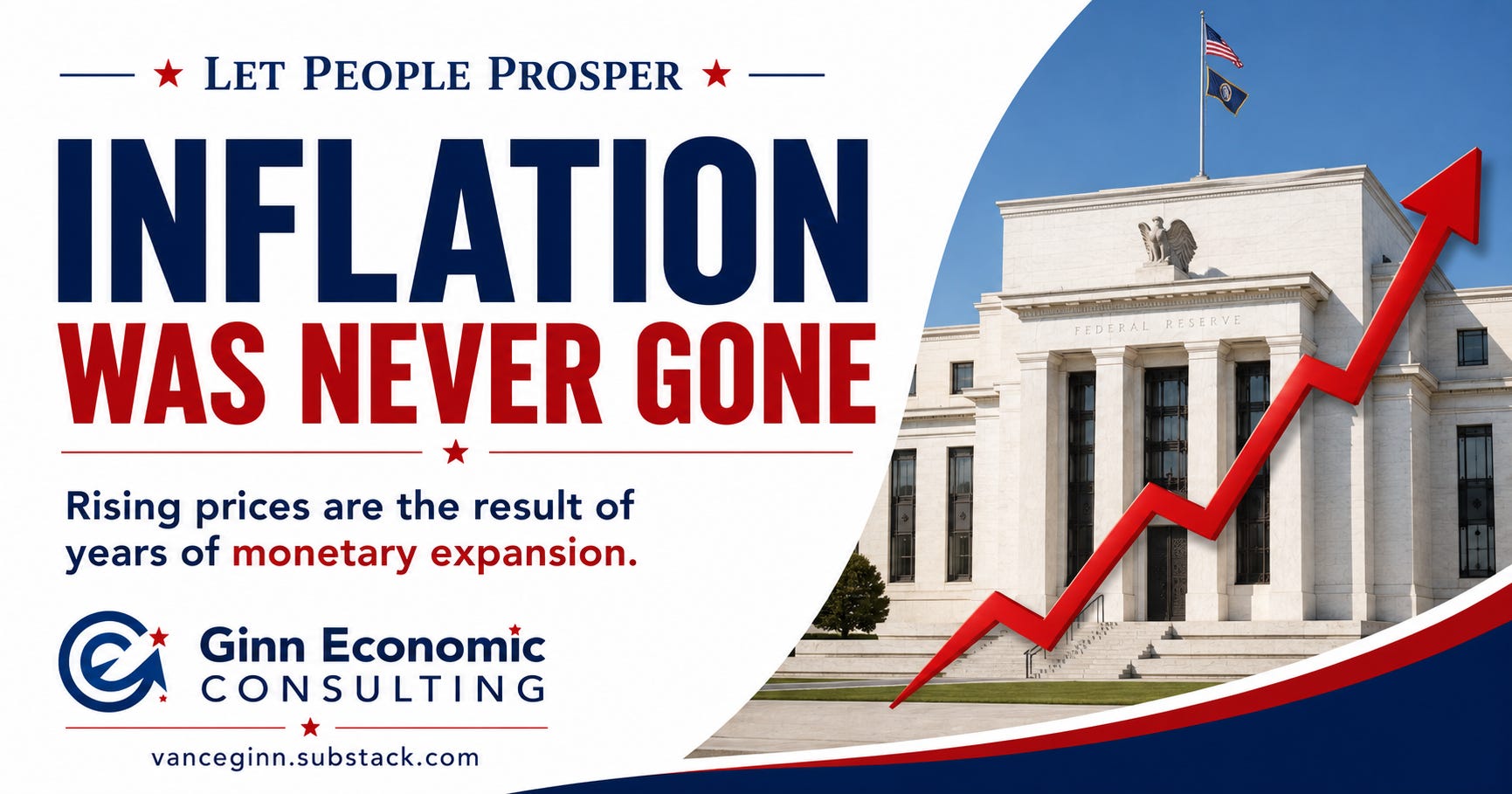
Washington keeps blaming inflation on the latest crisis. The real problem is decades of monetary expansion enabling fiscal excess.
Hello friends,
Inflation is heating up again, and Washington is already searching for someone else to blame. Where should the blame be directed, and how can we solve it?
The latest inflation data show prices continuing to rise too fast, with energy costs getting much of the attention amid conflict in the Middle East. But policymakers should not confuse the spark with the fuel.
The fuel is a Federal Reserve that never truly returned to normal after the 2008 financial crisis, combined with a federal government that continues to spend beyond what taxpayers can sustainably support.
The four charts below tell the story.
Key Points for Policymakers
Problem: The Federal Reserve’s balance sheet and federal debt have exploded since 2007 while prices measured by the Consumer Price Index, Producer Price Index, and PCE Price Index have steadily climbed. Inflation is not primarily the result of corporate greed, foreign conflicts, or isolated supply shocks. It is the predictable result of excessive monetary expansion enabling chronic fiscal irresponsibility.
Tradeoff: Every dollar spent by Washington must first be taken from taxpayers today or borrowed from taxpayers tomorrow. Government spending does not create new wealth. It reallocates resources from productive uses in the private sector, often reducing investment, innovation, and economic growth.
Solution: Reduce federal spending, cap budget growth below population growth plus inflation, reduce deficits, normalize the Federal Reserve’s balance sheet, and allow markets—not politicians and central bankers—to allocate capital.
The Post-2020 Surge Was Historic
Charts: Cumulative Changes Since 2020
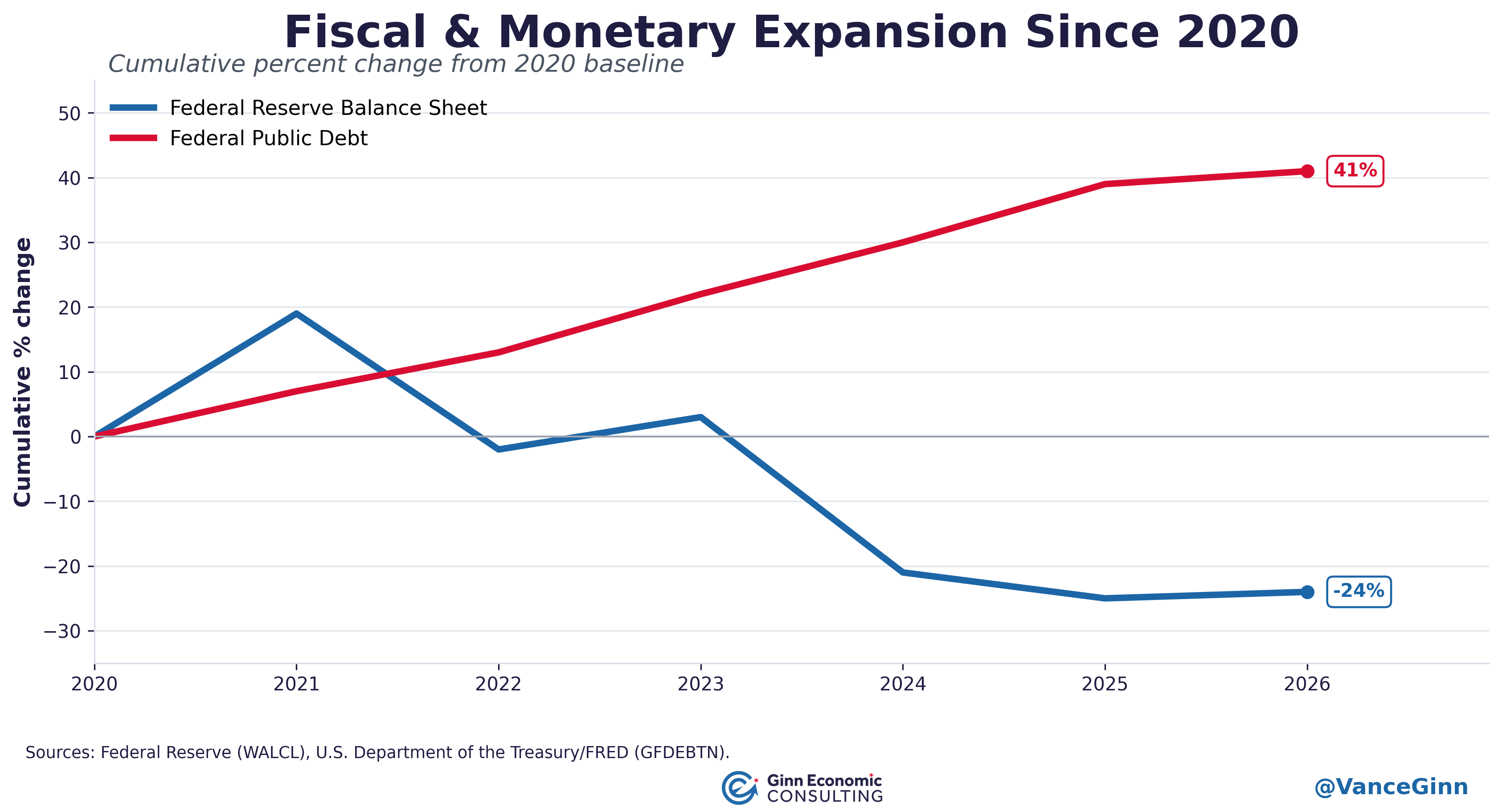
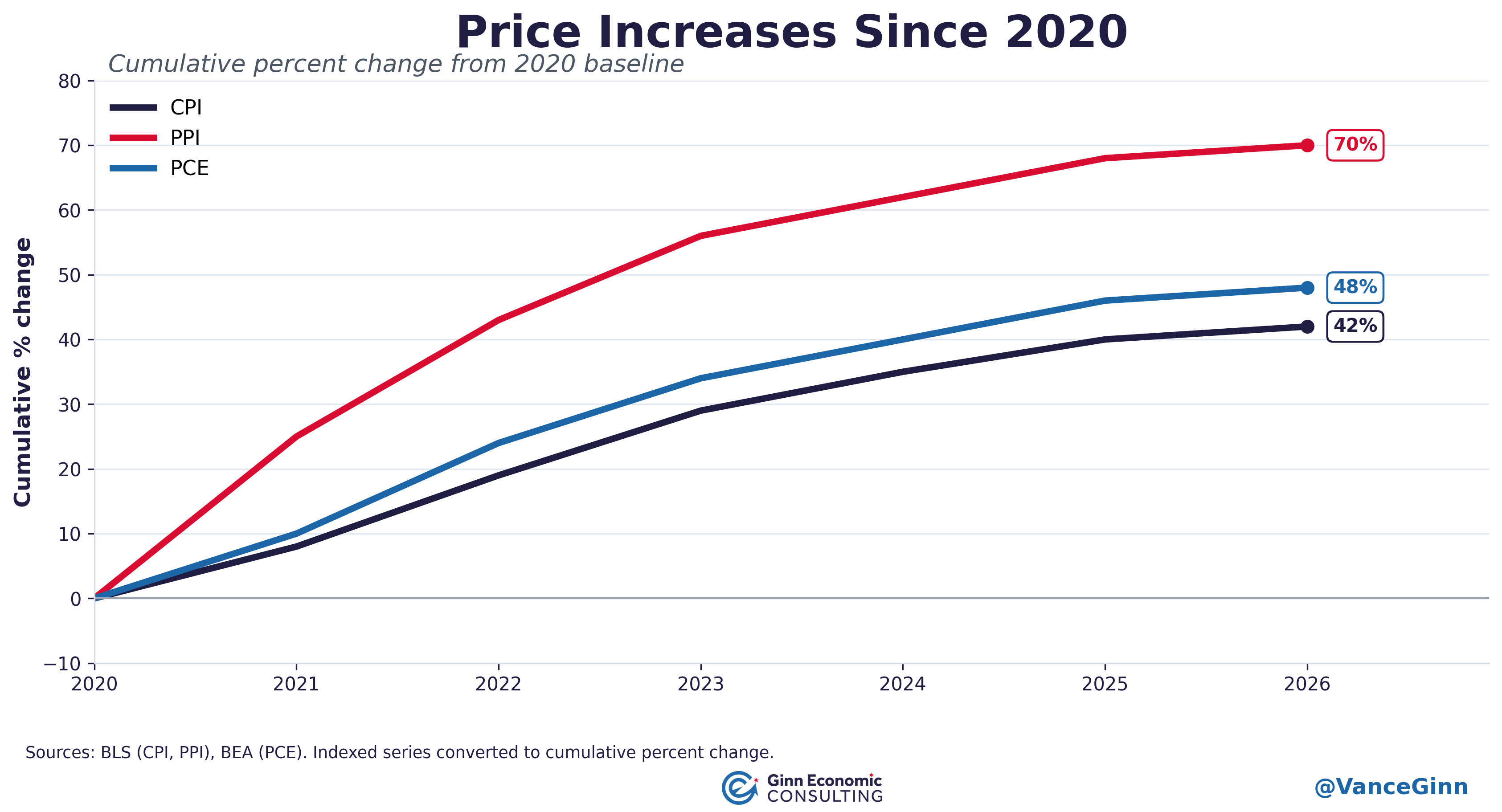
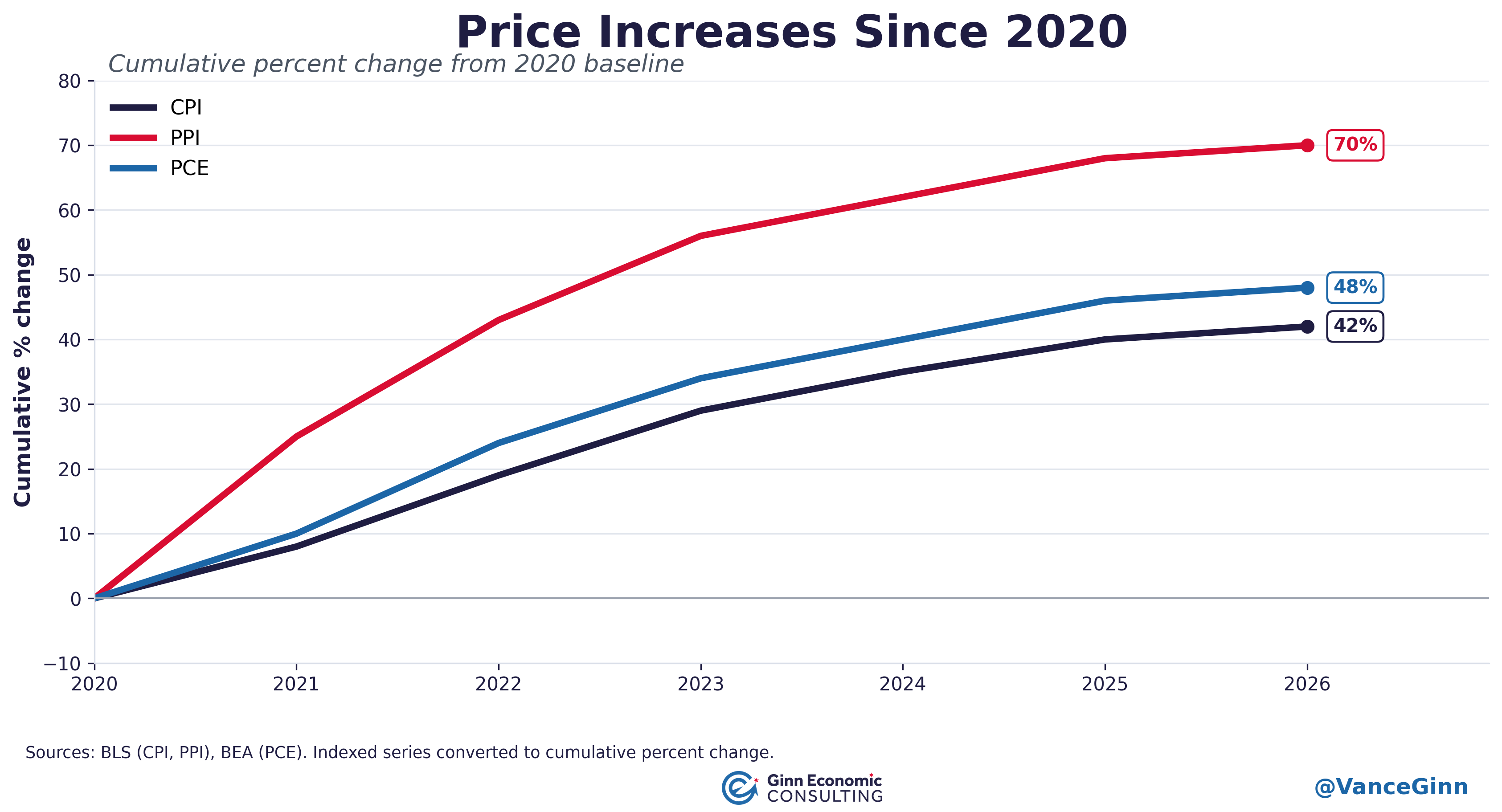
The first two charts compare cumulative changes since 2020 in the Federal Reserve’s balance sheet, federal debt, and major price indexes.
The pattern is difficult to ignore.
During the pandemic response, Congress approved trillions of dollars in deficit spending while the Federal Reserve dramatically expanded its balance sheet through asset purchases and emergency lending programs. Fed assets surged from roughly $4 trillion before the pandemic to nearly $9 trillion by 2022. Meanwhile, federal debt climbed above $36 trillion.
Prices followed.
Although inflation has cooled from its peak, cumulative price increases remain substantial. Families continue paying more for groceries, housing, transportation, energy, and other necessities because the overall price level moved higher and never came back down.
Higher interest rates helped slow inflation, but they never solved the underlying problem. The Fed only partially reduced its balance sheet, and Washington never stopped borrowing.
The Real Story Started Before COVID
Charts: Cumulative Change Since 2007
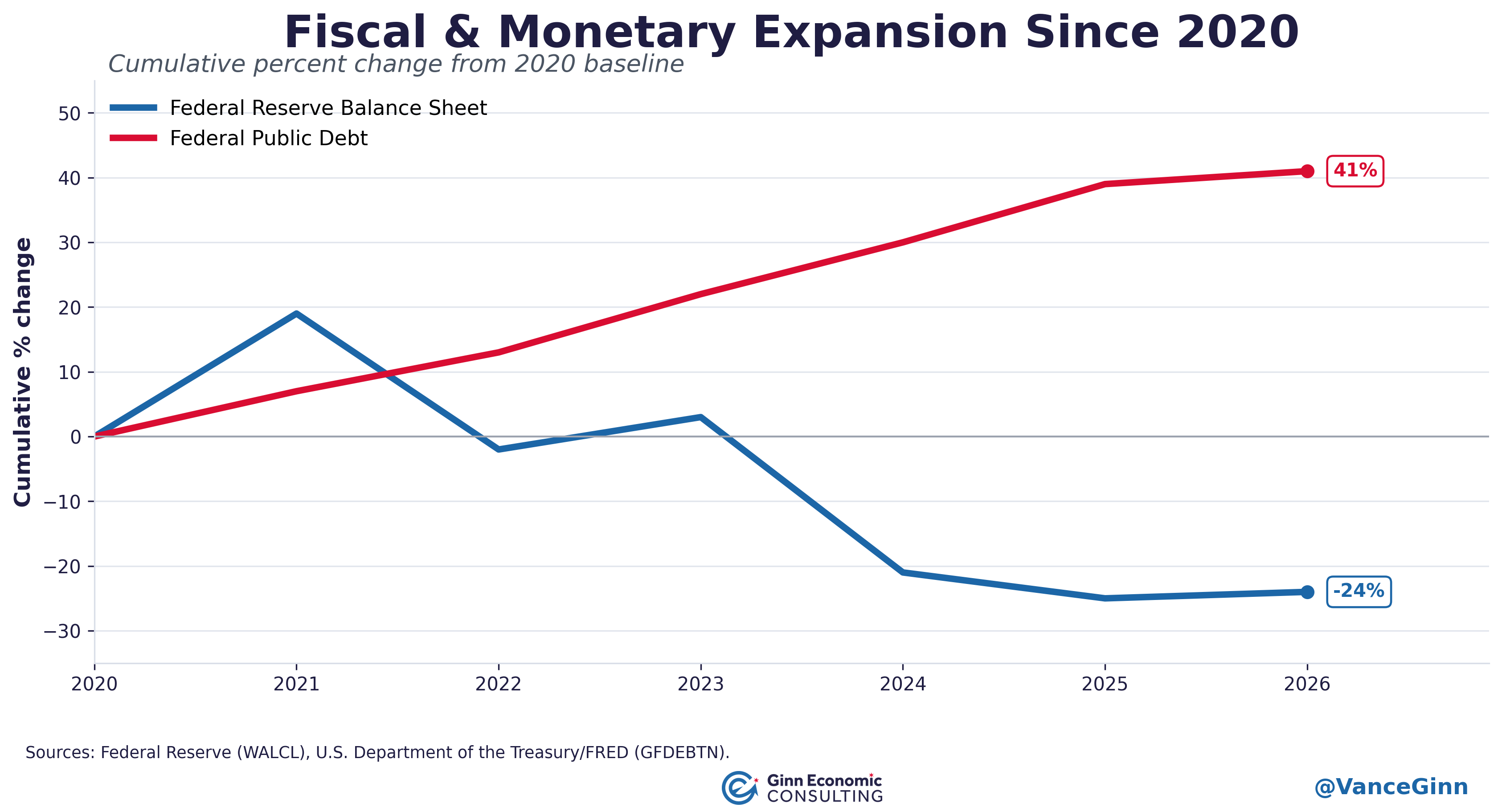
The second set of charts places recent events in a broader context.
Before the 2008 financial crisis, the Federal Reserve’s balance sheet was less than $1 trillion and represented roughly 6% of GDP. Today it remains near $6.7 trillion despite years of so-called quantitative tightening. Federal debt has increased even more dramatically.
Repeated rounds of quantitative easing changed expectations throughout the economy. Markets increasingly assume the Fed will intervene during periods of stress. Congress increasingly assumes borrowing can continue without consequence.
Both assumptions weaken fiscal discipline and encourage larger government.
As Milton Friedman famously argued, inflation is “always and everywhere a monetary phenomenon.” Monetary policy does not operate in isolation, however. Persistent deficit spending creates pressure for monetary accommodation, making inflation more likely and more damaging.
This matters because affordability has become the defining economic challenge for many Americans. Housing, food, health care, and energy costs consume a growing share of household budgets. Policymakers who focus only on temporary price pressures miss the deeper structural problem.
A Better Path Forward
Washington cannot subsidize, regulate, or borrow its way to affordability.
The better path is straightforward: spend less, simplify the tax code, and restore sound money.
The Federal Reserve should continue shrinking its balance sheet toward pre-crisis norms. Congress should cut spending and adopt a sustainable spending limit that grows more slowly than population growth plus inflation, similar to reforms highlighted in the Sustainable Budget Project.
Inflation was never really gone because the policies that created it never truly ended.
If policymakers want lasting affordability, they must address the source of the problem—not merely its symptoms.
Let People Prosper,
Vance Ginn, Ph.D.
President, Ginn Economic Consulting
Disclosure: The charts in this article were created using publicly available data from FRED, BLS, and BEA. ChatGPT assisted with data organization, visualization, and drafting support. All analysis, conclusions, and any errors are my own.