
Jobs Slow While Washington Keeps Spending
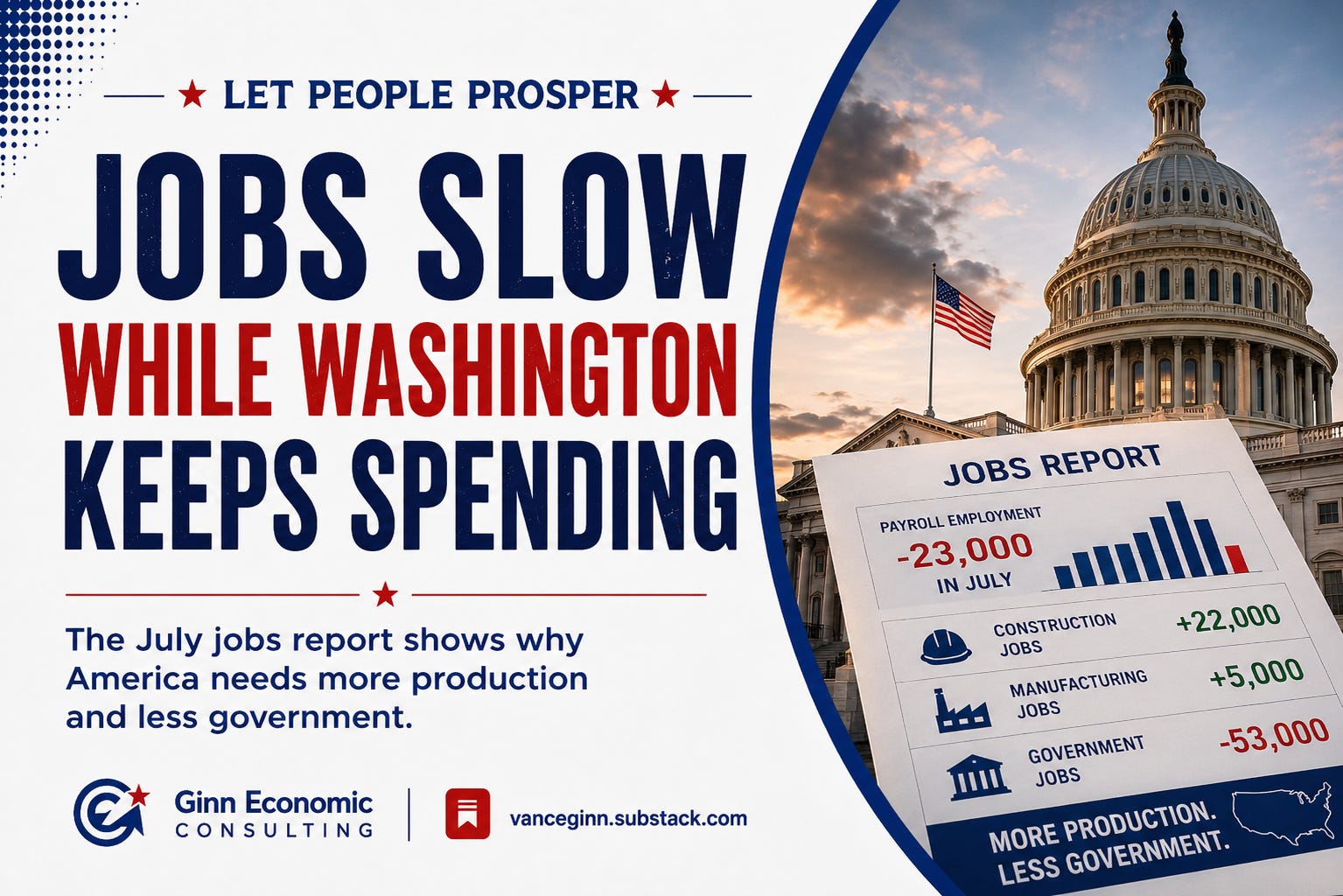
The July jobs report shows why America needs more production, stronger real wages, and less government.
Hello friends,
When I was serving as Chief Economist at the Trump 45 White House before COVID shutdowns disrupted much of the economy, one of my favorite responsibilities was explaining a genuinely strong labor market. Businesses were hiring broadly, wages were rising, and opportunities were expanding.
My job would be much harder today. The latest July Employment Situation report is not a recession report, but neither is it the picture of strength suggested by the 4.1% unemployment rate.
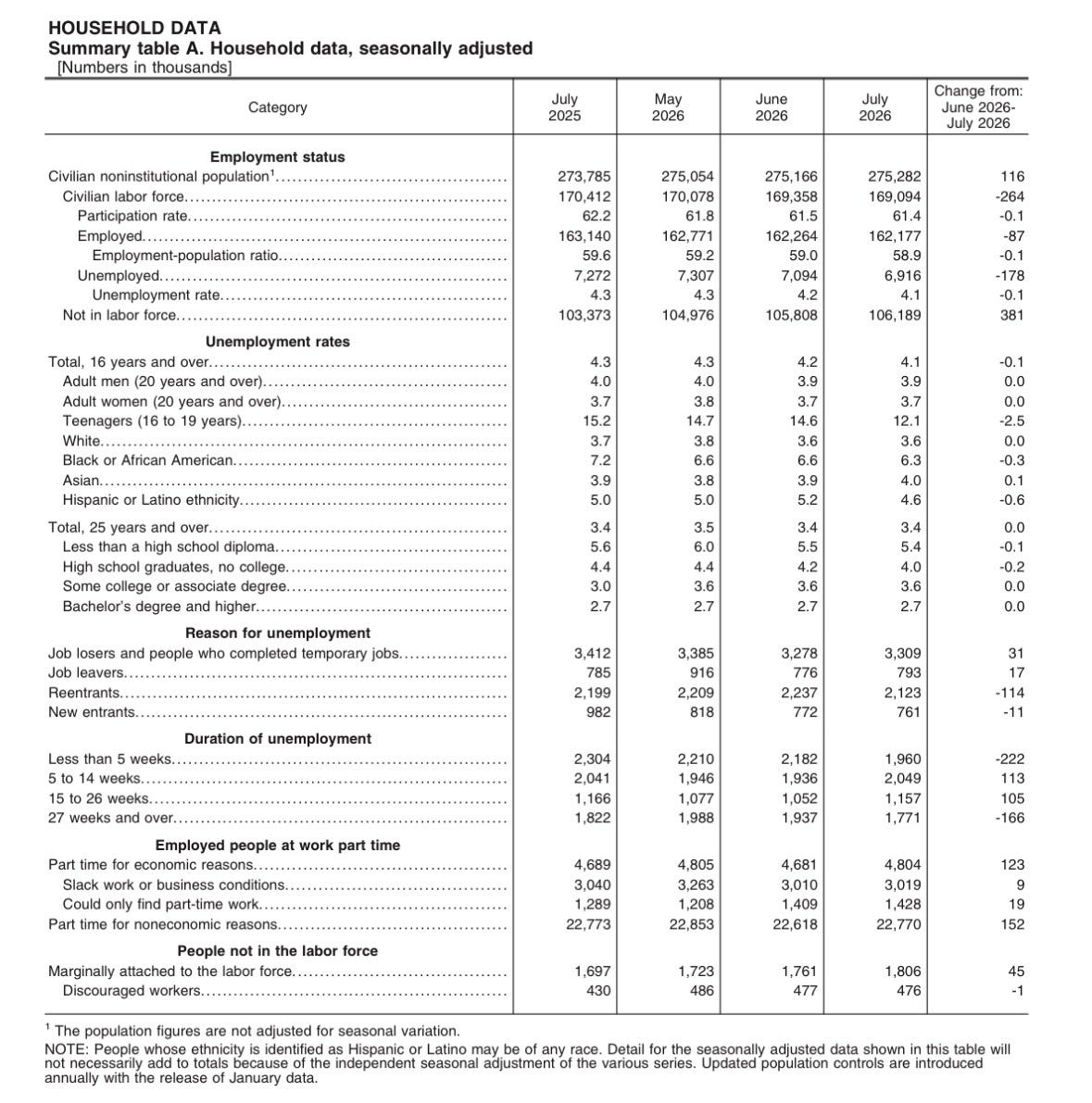
Policymakers should ask a better question: Is America creating enough productive private-sector growth to raise living standards? Right now, not nearly enough.
Private Growth Is Weak
According to the BLS establishment survey, payroll employment fell by 23,000 in July, while May and June were revised down by a combined 103,000 jobs. Private payrolls increased by only 30,000, with the three-month average slowing to just 40,000 jobs per month.
But composition also matters. Goods-producing industries added 25,000 jobs, including 22,000 in construction and 5,000 in manufacturing. Those gains are encouraging because building homes, factories, equipment, and infrastructure expands productive capacity.
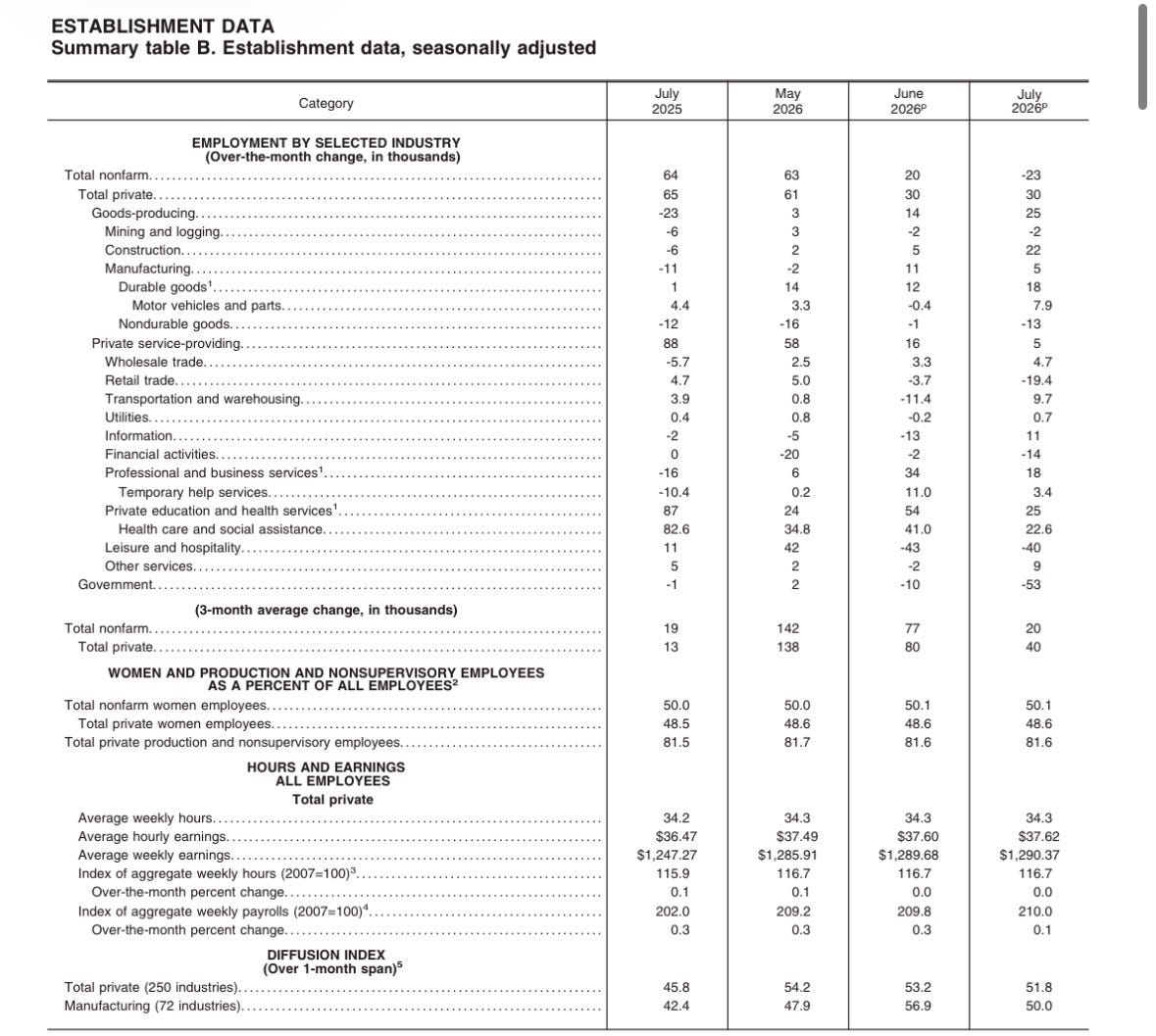
Meanwhile, retail lost 19,400 jobs, financial activities lost 14,000, and leisure and hospitality lost 40,000. America needs more jobs tied to production, investment, and productivity, not simply a larger payroll count.
Less Bureaucracy Can Be Good
Government employment fell 53,000, largely in local public education. Some will automatically call that bad news. I don’t. Teachers and other government workers can provide valuable services. But every government job is financed by scarce resources first taken from taxpayers or borrowed against future taxpayers.
If local school systems reduce administrative bureaucracy while improving student outcomes, that can be of great value. Labor and capital can move toward competitive private-sector uses where businesses survive by creating value people voluntarily purchase. Government payrolls redistribute resources. Markets test whether those resources are creating value.
Wages Barely Beat Inflation
Workers care about what their paycheck buys. BLS earnings data show average weekly total private earnings increasing from $1,057.84 to $1,095.12 over the past year, about 3.5%, while average hourly earnings rose 3.2%. That’s progress, but barely enough after years of elevated inflation.
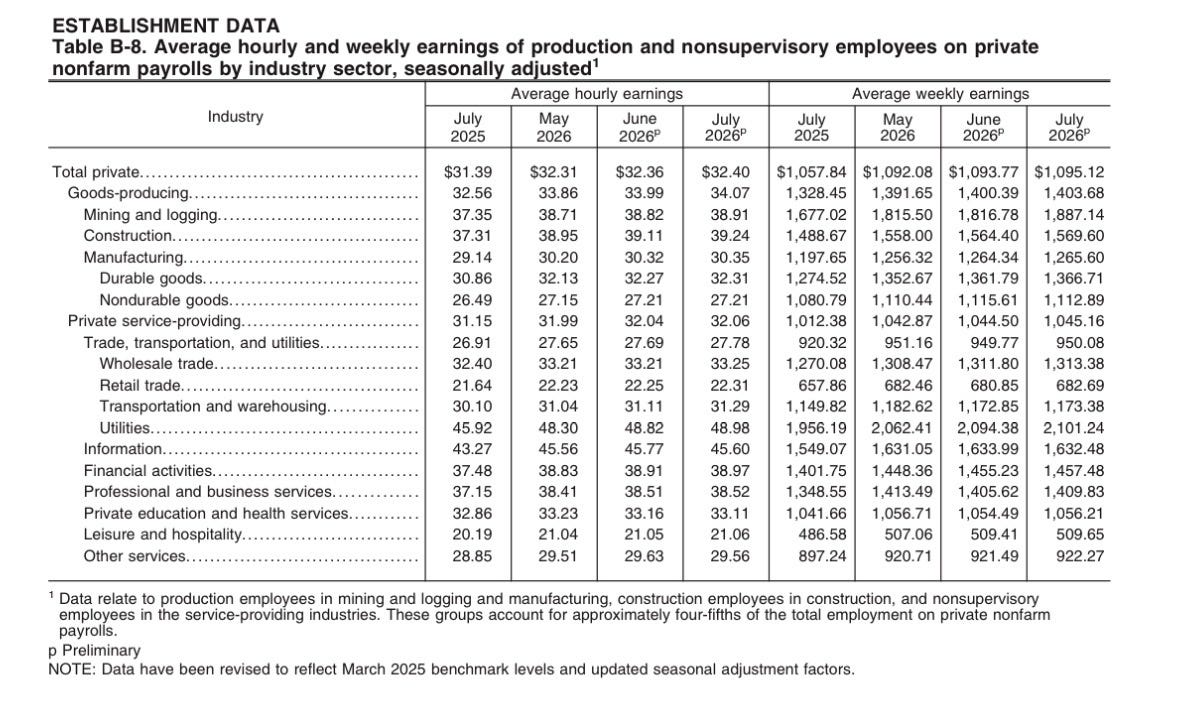
The latest Consumer Price Index and Chained CPI show annual inflation has moderated to around 3.5%, allowing workers to regain some purchasing power. But families still face a difficult affordability situation since 2021. A small real wage gain today does not erase years of lost purchasing power, and no gain like last month hurts.
Washington Isn’t Helping
Federal policy remains part of the problem. The Congressional Budget Office projects historically large deficits even without a recession. Government cannot create resources by spending more. It must tax, borrow, or ultimately rely on monetary expansion.
Too much spending crowds out private investment, raises expectations of future taxes, pressures interest rates, and contributes to inflation when the Fed increases its balance sheet too fast. America does not need another government-created “demand boost.”
We need more production.
That means restraining government spending, reducing regulatory barriers, maintaining competitive taxes, expanding affordable energy, rewarding work and investment, and letting markets move scarce resources toward their highest-valued uses.
The July jobs report reminds us that unemployment is not the North Star. Instead, the North Star includes more productive private employment, stronger productivity, and real earnings consistently rising. That’s how opportunity expands and people prosper.
Vance Ginn, Ph.D.
President, Ginn Economic Consulting
Subscribe and share Let People Prosper, and find more of my work at vanceginn.com.