
Prosperity Is Not a Pie
Zero-sum gave economic fallacy explained.
Hello friends!
In a recent Fox News interview, Vivek Ramaswamy put it plainly:
“Zero-sum economics is a fallacy. Someone else’s success doesn’t take away from your success. It actually makes you more likely to succeed yourself.” Watch the interview:
That line should be written on the wall of every state capitol, city hall, and congressional office in America.
For policymakers, the keys are clear: stop punishing success, remove barriers to abundance, and trust people to create value.
Too much of today’s politics teaches Americans that life is a fight over fixed money, success, and opportunity. If a business earns a profit, workers must be cheated. If another country sells us something, America must be losing. If new technology creates wealth, jobs must disappear.
That story is easy to believe when life feels expensive. Housing costs too much. Energy bills are painful. Groceries still sting. Families are working hard and wondering why the American Dream feels harder to reach.
But frustration does not turn bad economics into truth.
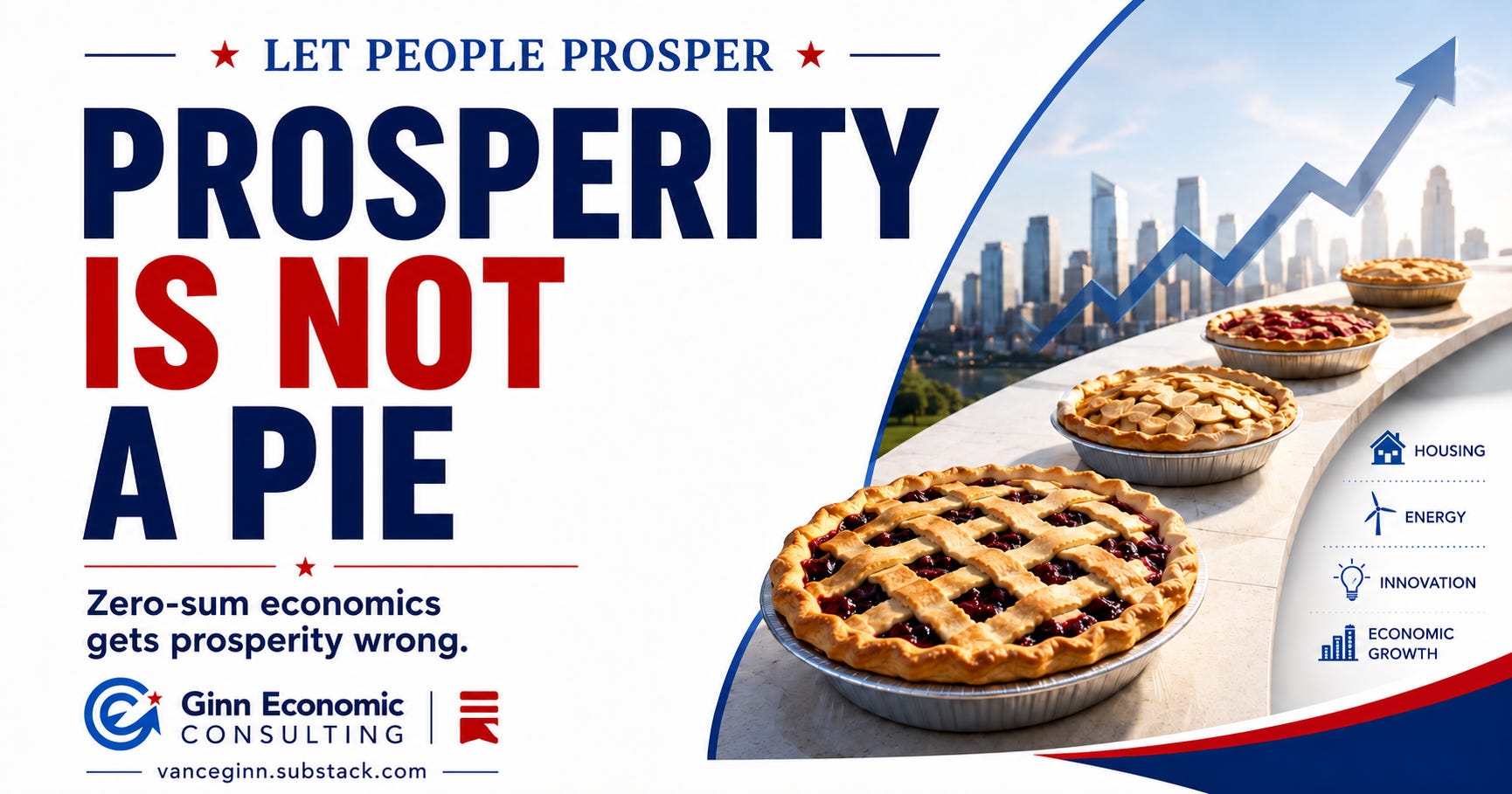
Prosperity is not a pie with only so many slices. If it were, America would have run out long ago. Each generation has had better medicine, transportation, communication, homes, and opportunities than the generation before it because free people kept baking more pies.
This is why the outrage over Elon Musk’s wealth misses the point. People see headlines about him becoming a trillionaire and assume that money was taken from everyone else.
But most of that wealth is not cash in a bank account. It is tied to ownership stakes in companies like Tesla and SpaceX, based on what investors think those companies may be worth. Those are unrealized capital gains. They can rise, fall, or disappear depending on whether the companies keep creating value.
A paper gain is not the same thing as income. Wealth created through ownership is not theft. It reflects expected future value from products, services, jobs, investment, and innovation that people voluntarily support.
A business owner does not succeed in a free market by stealing value. He succeeds by creating value that other people freely choose to buy. Customers get something they want. Workers earn wages. Suppliers gain business. Communities get jobs and services.
That is not exploitation. It is cooperation. And that is what too many policymakers miss.
They see profit and assume abuse. They see growth and assume greed. They see success and assume someone must have been harmed. So they respond with higher taxes, more rules, price controls, subsidies, tariffs, and mandates.
Then they wonder why life gets more expensive.
Builders are not why homes cost too much. Government makes building too hard and costly through zoning rules, permitting delays, fees, and neighborhood opposition. When fewer homes are built, prices rise.
Families are not struggling because America has too much affordable energy. They struggle when policy blocks production, delays infrastructure, and forces costly choices onto the grid. Less supply means higher prices. More supply means lower costs and more breathing room.
Tariffs may sound tough, but they are taxes on Americans. They make families and businesses pay more for what they need. America does not become richer by making goods more expensive. We become richer when people are free to buy, sell, specialize, and compete.
The same applies to artificial intelligence, data centers, and the next wave of technology. Change can be uncomfortable, but stopping innovation will not protect prosperity. It will destroy it. Productivity is how workers earn more because they can produce more value with better tools.
This is the choice before policymakers. They can build a politics of resentment that punishes success, restricts growth, and pretends government can manage scarcity better than free people can create abundance. Or they can build a policy agenda for prosperity by spending less, taxing less, regulating less, and trusting people more.
Markets are not perfect because people are not perfect. But free markets give people a chance to solve problems, learn from failure, serve others, and improve their lives. Government should protect property rights, enforce contracts, punish fraud, keep the rules fair, and stop micromanaging every outcome.
The American Dream was never about pulling successful people down. It was about giving more people the chance to rise.
Zero-sum economics teaches envy instead of effort and rewards blame instead of building. Someone else’s success does not take away from yours.
That is how people prosper.
America does not need leaders who fight over slices. America needs leaders who let people bake more pies. Will you accept this mission?
Let people prosper,
Vance Ginn, Ph.D.
President, Ginn Economic Consulting