
Which Policies Will Shape America’s Tech Future? | Prosperity Pulse #29
A round-up of my work this month examining technology, tariffs, and debanking.

Hello Free Market Warriors!
I always enjoy these regular check-ins to share what I’ve been working on and pondering over the past month. Recently, much of my focus has been on technology policy.
I just returned from a wonderful trip to the Pelican Institute’s Solutions Summit, where I had the opportunity to moderate a panel titled “Silicon Bayou: Lead in Technology So America Can Lead the World.” I was joined by Heather Curry from Policy Edge, Patrick Hedger from NetChoice, Logan Kolas from American Consumer Institute, and Kevin Frazier from Abundance Institute. It was a lively discussion about the policies that will shape the future of technology and innovation in America.

This conversation complements much of the work I’ve been doing in the technology and antitrust space.
Recently, I co-published a report with NetChoice examining how antitrust policy impacts the technology sector and why restoring the consumer welfare standard is essential for preserving innovation and competition. I also released a technology policy guide covering issues such as social media bans for minors, age-verification mandates, and securing the reliable energy needed to power the AI revolution. And it was great fielding many questions on these topics in my recent appearance on Washington Journal on C-SPAN.

Beyond that work, I’ve had the pleasure of speaking with industry groups. In February, I spoke with the Texas Aggregates and Concrete Association about the key economic and policy issues impacting their industry.


I’m also looking forward to spring break and spending time with family before a busy travel season for work. I hope you’re able to get some well-deserved rest as well and enjoy the beautiful change of seasons.
Thank you for your continued support of my work to let people prosper! God bless you and your family.
Highlights from This Month
1. AI, Technology, & Antitrust Policy
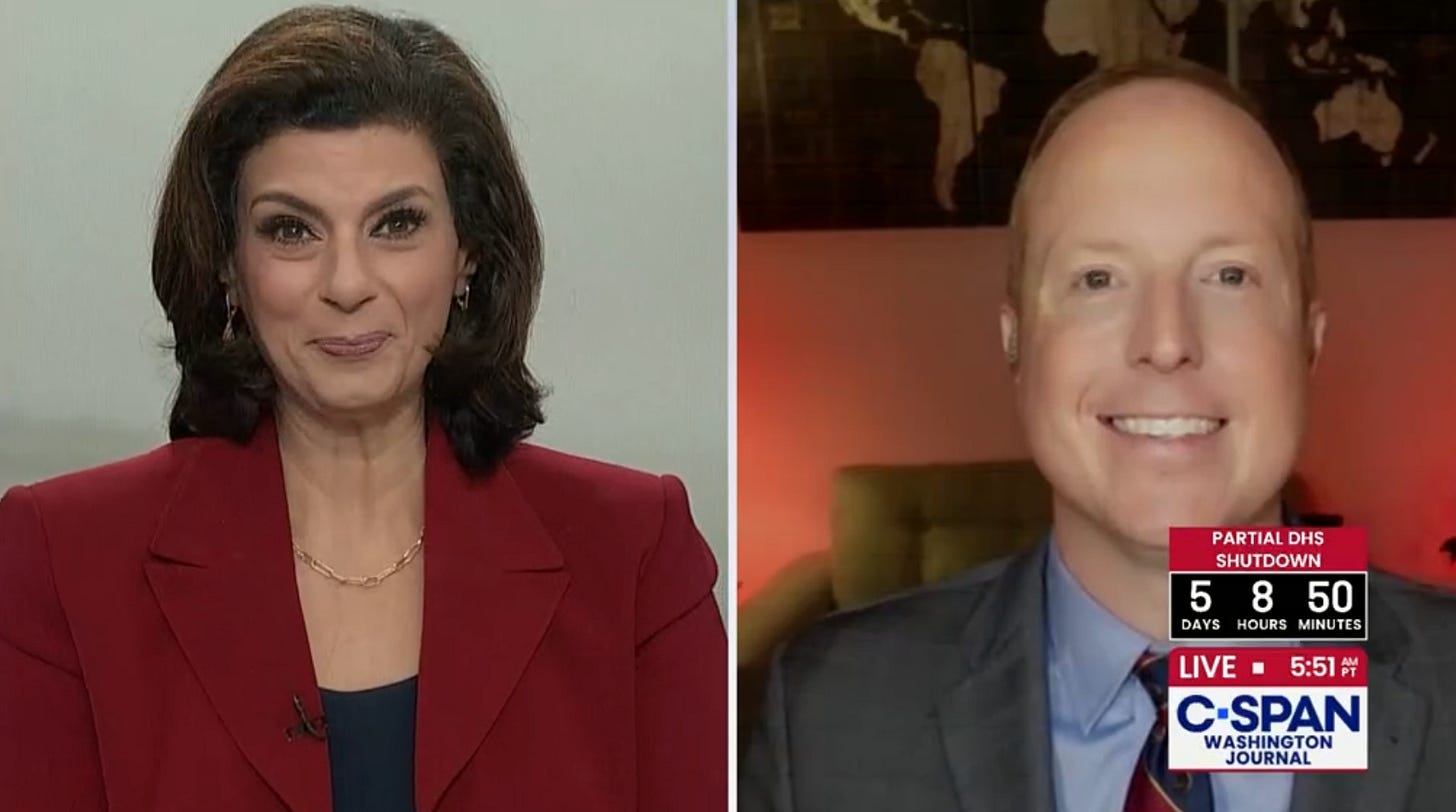
Many people are worried about how artificial intelligence could affect jobs, energy demand, and the broader economy. But every wave of innovation brings a predictable political response: fear, followed by calls for regulation. As I argued on C-SPAN’s Washington Journal , policymakers should move past fear, focus on the opportunities ahead, and adopt policies that allow innovation and prosperity to flourish.
Innovation thrives when firms can invest, experiment, and scale under predictable rules. In my new report co-published with NetChoice, I argue that antitrust policy should protect consumer welfare and competition—not attempt to manage markets.
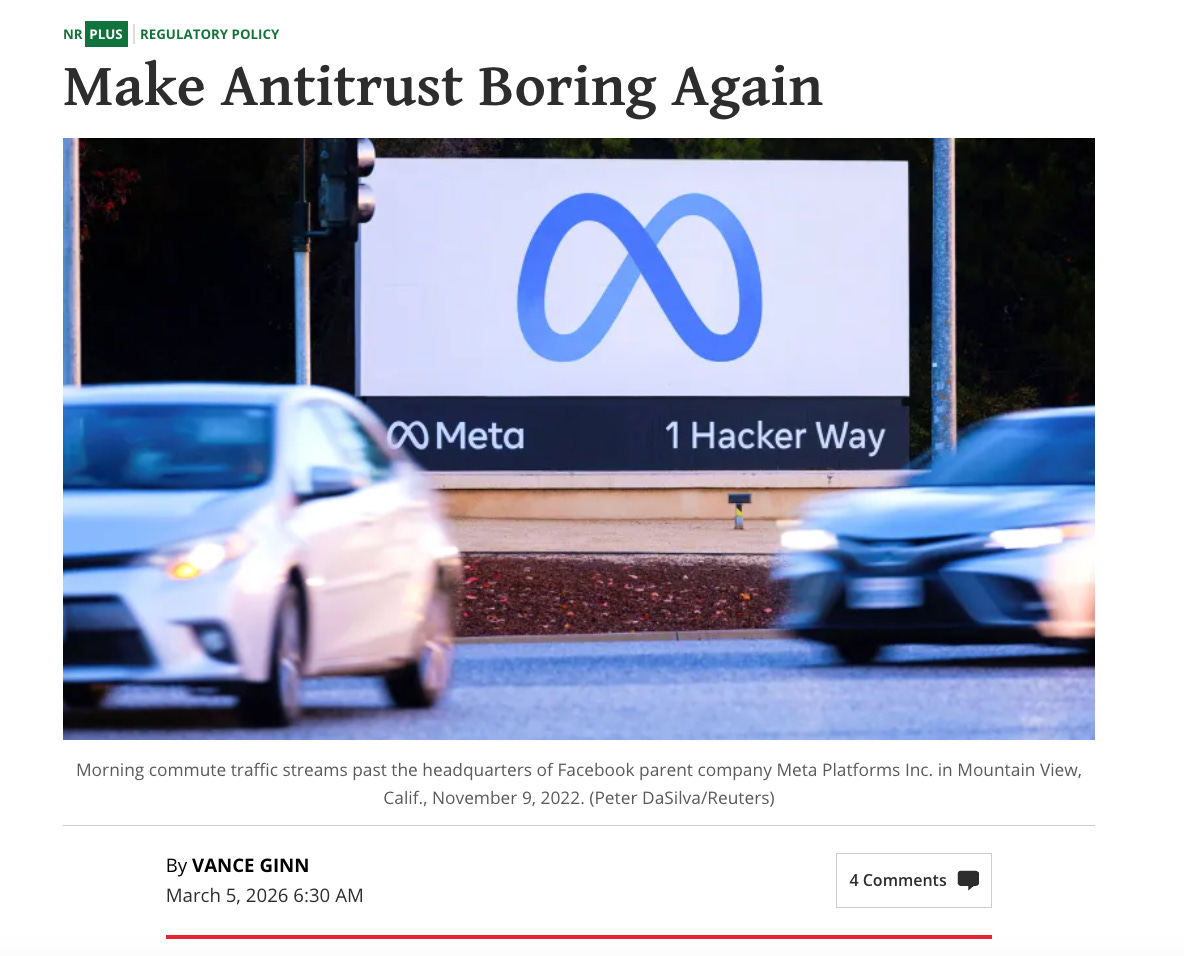
The bottom line is that antitrust works best when it is boring. In National Review, I explain that if antitrust policy shifts toward populist storytelling rather than measurable consumer harm, the result will be less investment, slower innovation, and weaker competition.
Artificial intelligence could even strengthen competition in American banking. Large banks are integrating AI into core financial services to modernize risk management and customer-facing technology. But if policymakers follow their usual instinct—regulating innovation before fully understanding it—they risk slowing the very revolution that could expand financial access and competition.
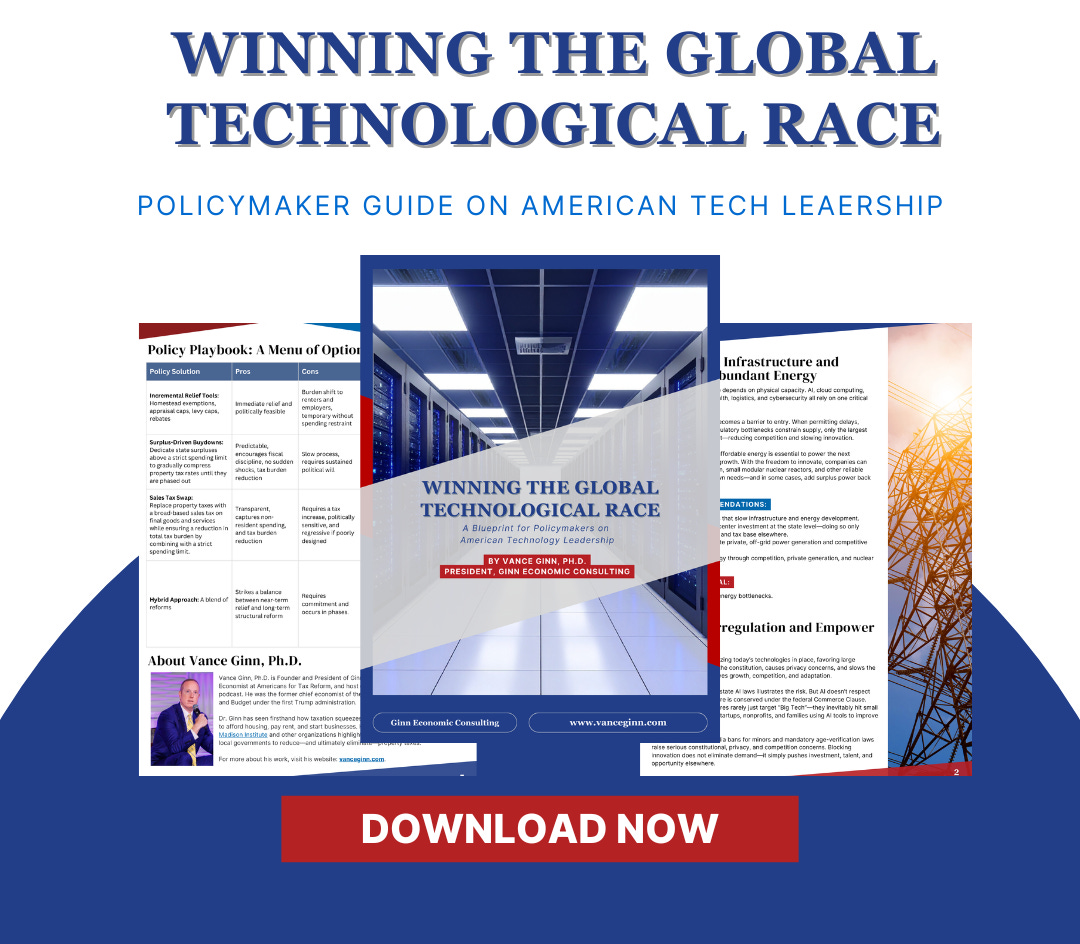
If you’re interested in learning more about the best policies for governing AI, social media, and emerging technologies, you can download my newly released guide for policymakers. It outlines how the United States can remain a global technology leader while protecting competition and innovation.




2. Tariffs & Taxes
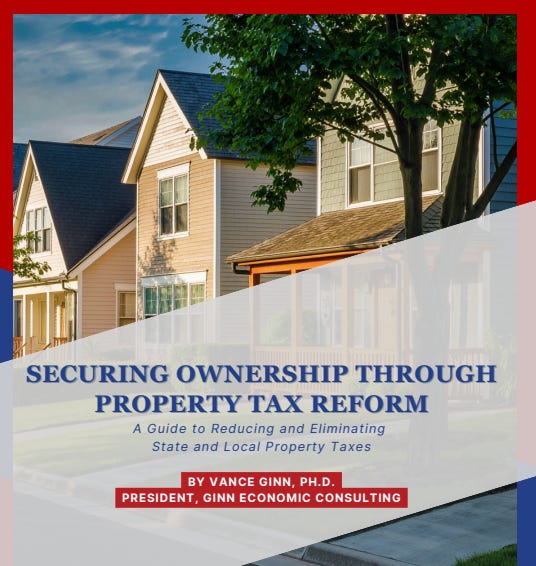
A growing number of states are exploring ways to reduce or eliminate property taxes. This is a welcome shift, as property taxes undermine true ownership. For policymakers interested in pursuing similar reforms at the state or local level, I recently released a guide on practical solutions for property tax reform.
In New York City, Mayor Zohran Mamdani and City Hall are floating a 9.5% property tax rate hike if state lawmakers do not approve higher taxes on wealthy residents and corporations. But property taxes are not a neutral lever—they ultimately flow through to higher rents and higher living costs.
In a 6–3 decision, the Supreme Court of the United States ruled that the emergency statute being used did not authorize President Trump’s sweeping tariffs. The larger lesson is that Congress must stop outsourcing its constitutional responsibilities. I take a deeper look at what this ruling means on Substack and at the Pelican Institute.
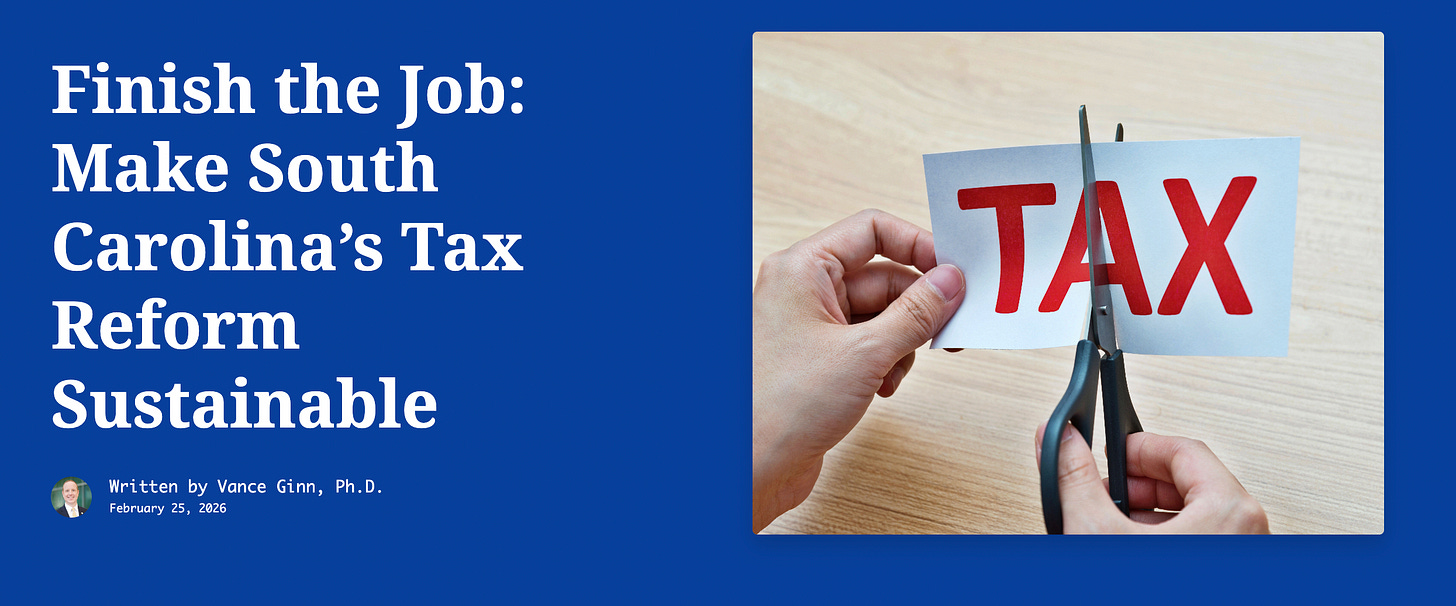
South Carolina is closer than ever to a real, structural path toward eliminating its income tax. The key question now is whether the reform will hold when the economy slows—or whether promised tax relief will stall. The answer will depend on spending restraint.
Regulation also carries hidden costs—including the corruption it can invite. Matthew D. Mitchell and I were recently quoted in Reason Magazine on how states can reduce corruption by simplifying and limiting regulatory systems.


3. Price Controls, Regulations, & Banking
The Trump administration is considering an executive order or Treasury action requiring banks to collect customers’ citizenship information. In my commentary at Fox News, I warn this would represent a sweeping expansion of federal data collection—raising costs for banks and customers, shrinking access to basic banking services, and pushing more activity into the financial shadows.
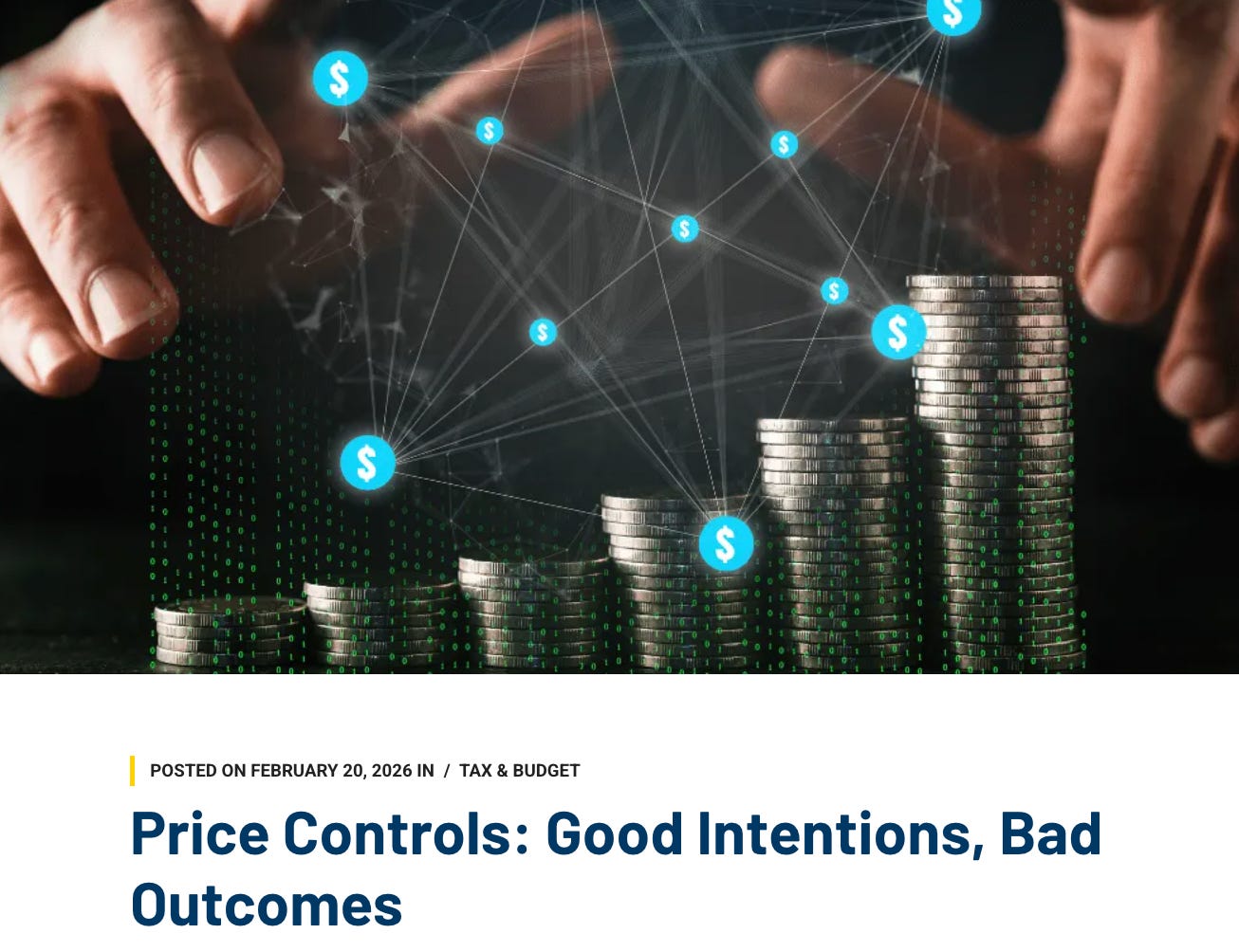
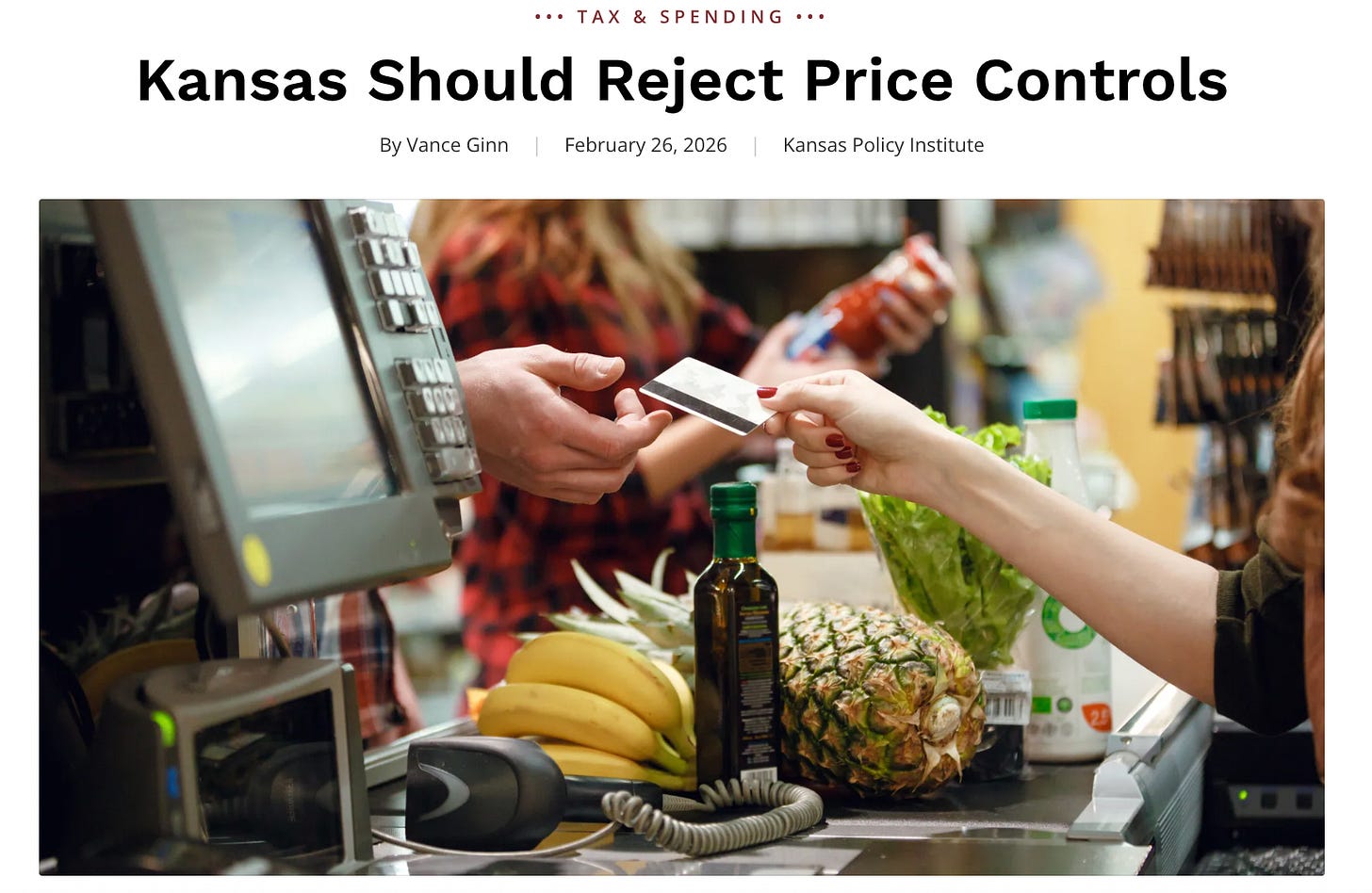
Price controls are tempting because they appear simple. But economics is clear: these “easy fixes” often backfire. I explain why in recent pieces for the Pelican Institute and Kansas Policy Institute.
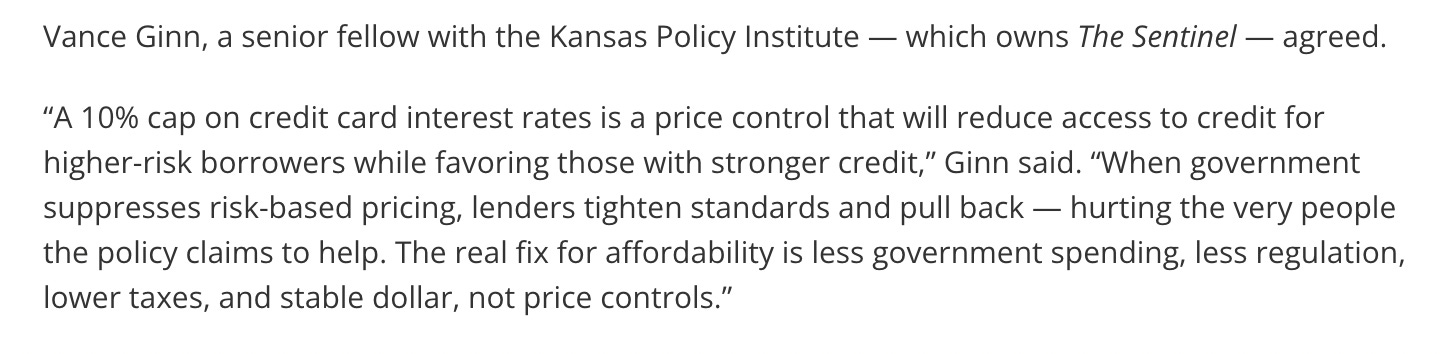
Washington is also considering a misguided 10% cap on credit card interest rates. I discussed the likely consequences of such a policy in quotes published by The Sentinel.



President Trump recently criticized banks for “undermining” the stablecoin framework and urged them to strike a deal with the crypto industry—turning what had been a technical policy dispute into a White House priority. In my analysis for InsideSources’ DC Journal, I explain that the “deal” being floated isn’t free-market competition. It’s a regulatory workaround.

President Trump’s State of the Union struck a confident tone. It has been a long time since Americans heard such optimism about the country’s capabilities. In my analysis, I examine the policies included in the speech—along with those that were missing—and offer recommendations for policies that truly let people prosper.
As Washington tries to address housing affordability, policymakers are chasing the wrong target by proposing bans on large institutional investors purchasing single-family homes, townhouses, and condos. Such policies could actually reduce rental supply—leading to higher rents, fewer housing options near good schools, and less mobility for working families.
Why are gasoline prices so high? Energy price shocks are not simply acts of fate—they reflect geopolitical risks colliding with years of poor policy choices. But price controls are not the solution. Capping energy prices without increasing supply only leads to less energy production.


4. Labor Market
More than 330,000 Kentuckians earn income as freelancers, contractors, or self-employed workers. Surveys show that 81% of self-employed workers want portable benefits solutions. In commentary with Angela Erickson for Louisville Business First and the Bluegrass Institute, we explain how portable benefits that move with workers as they change jobs, clients, or gigs could better support today’s evolving workforce.

The latest February jobs report should be a wake-up call for policymakers. While the headline numbers appear stable, the deeper data suggests the labor market may be weakening in ways that increasingly resemble a jobs recession.

5. Free Market Capitalism
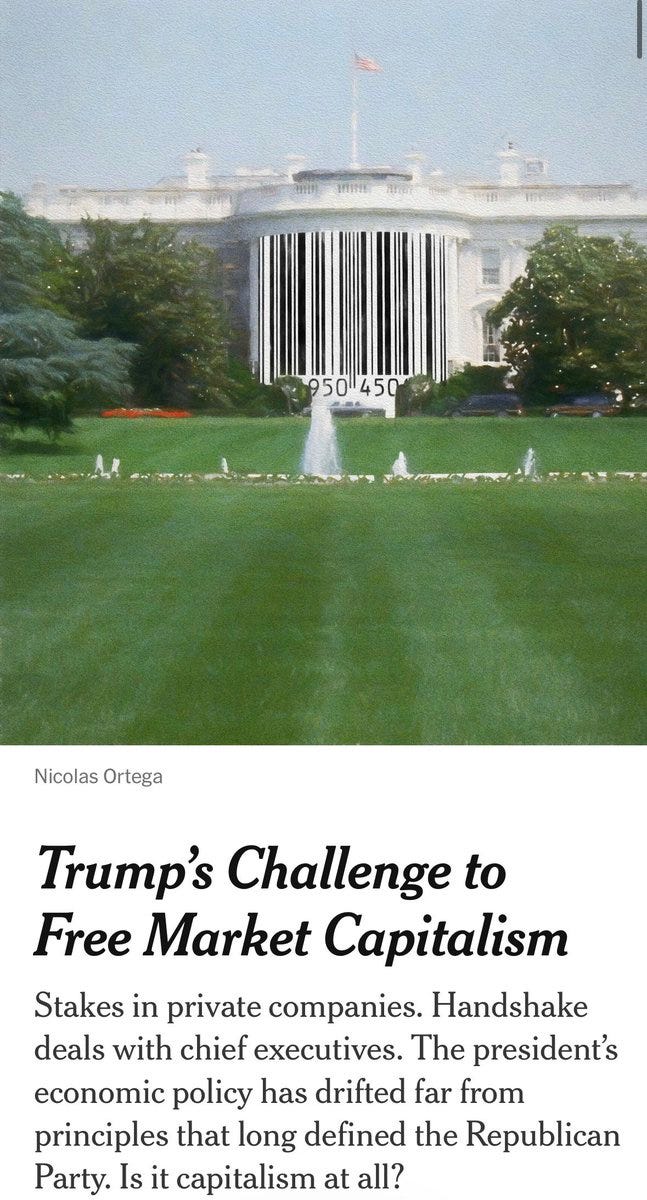
The New York Times recently quoted me on policy missteps in trade and industrial policy during the second Trump administration. I also appreciated my friends at Freedom Conservatism highlighting the interview.
Despite declining favorability, free-market capitalism still delivers the goods. In my piece for The Daily Economy at American Institute for Economic Research, I explain why we should be concerned about the areas where support for capitalism is losing ground.
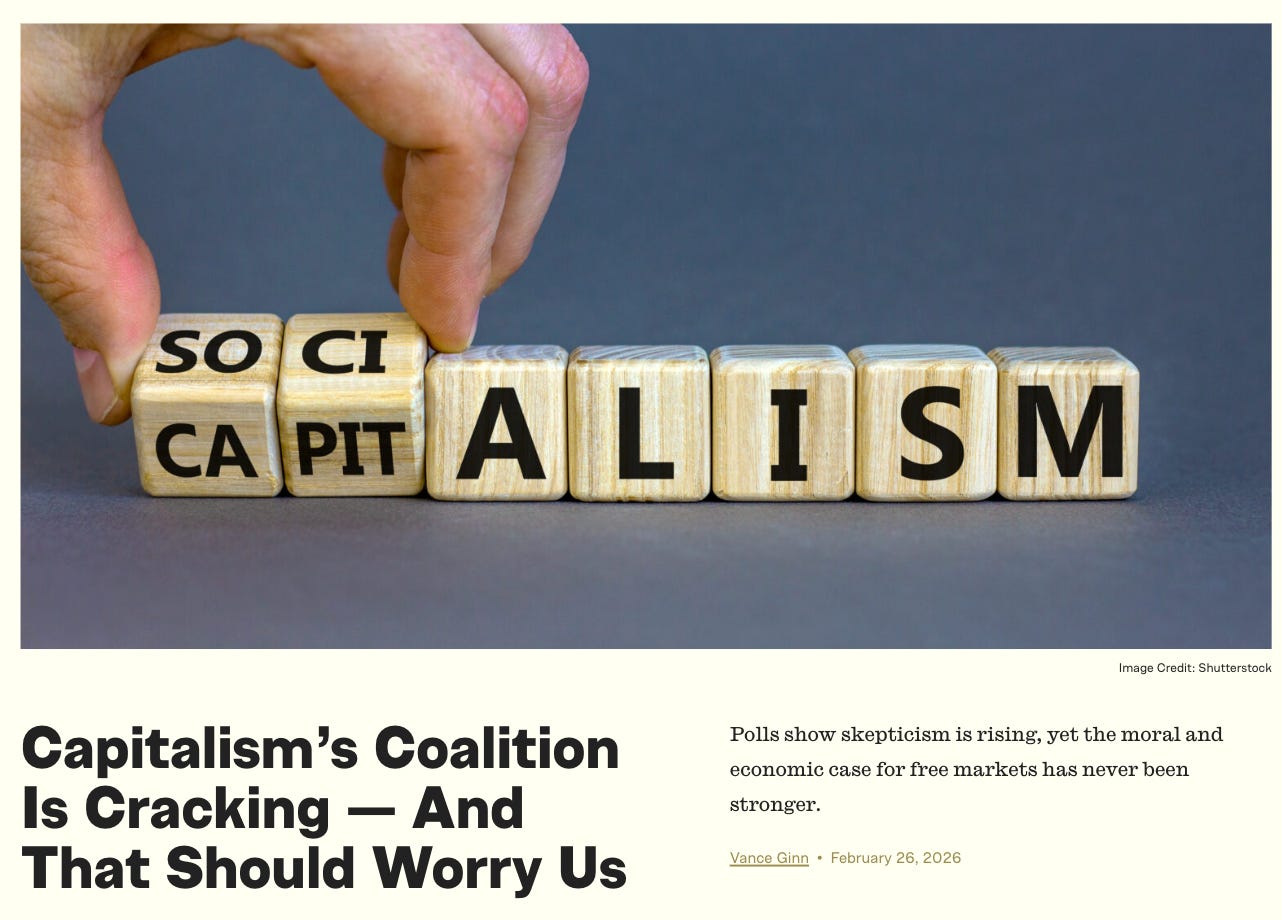
I also enjoyed discussing my recent report for the Pelican Institute on the economy with William Wallis. We talked about how free-market capitalism helps people prosper.


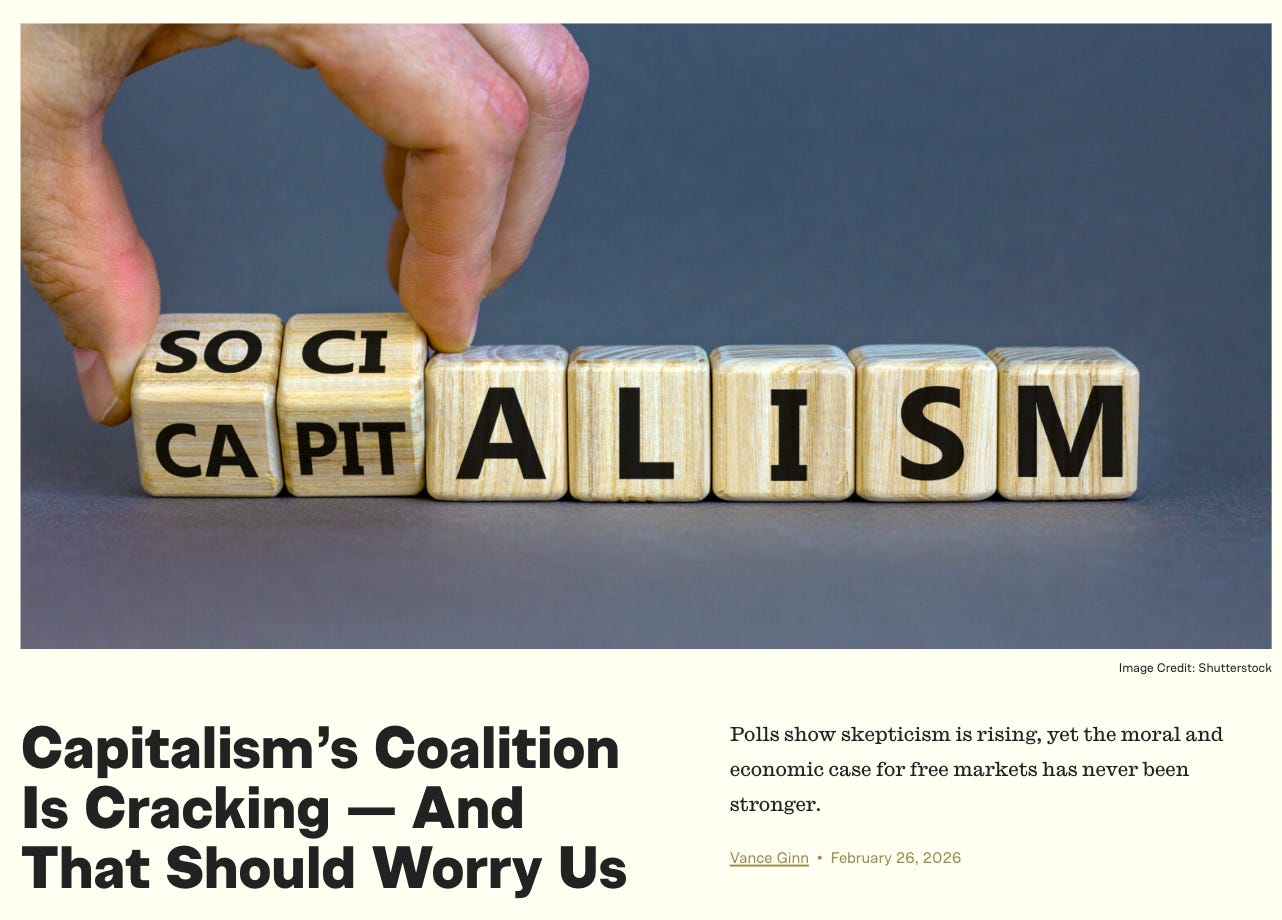
Is income inequality really the problem many claim it is? In another article at The Daily Economy, I highlight a graphic from The Economist showing that global living standards have been converging—meaning poorer countries are catching up in ways that matter for everyday life.

6. Spending
Austin Current quoted me on a proposal for a citywide efficiency audit—an ongoing, independent assessment of city services aimed at improving accountability and ensuring taxpayers are getting value for their dollars.

7. State Matters
South Carolina ranks 21st nationally in the Economic Freedom of North America report. In my analysis for the Fraser Institute, I explain that the Palmetto State’s middle position reflects a state where core economic institutions work reasonably well—but where one persistent constraint continues to hold back stronger progress.

How should policymakers interpret last week’s primary elections? Results in Texas, North Carolina, and Arkansas suggest it’s time to adopt enforceable limits on state and local spending growth and make tax relief permanent.
In interviews with KTRH News Radio and KURV 710 News Talk, I discussed why corporate headquarters continue moving from blue states to red states—with Texas leading the way after attracting 212 new corporate relocations.


Meanwhile, anxiety over data centers is growing in Austin. Lawmakers must get this right. Texas should show the country how to approach this challenge by recognizing that data centers are foundational to prosperity, security, and modern life. The real question is how to make Texas abundant enough to support them.

8. Health Policy News
The Medicare Advantage open enrollment window closes at the end of the month. As debate grows over upcoding and overpayments, policymakers are being forced to confront how the program is actually financed. But Medicare Advantage is a warning sign, not the disease. The real problem is a healthcare financing system built around government formulas, insurer incentives, and bureaucracy rather than patients and doctors.
Meanwhile, Tennessee is considering legislation that would ban pharmacy benefit managers (PBMs) from owning, controlling, or holding any beneficial interest in pharmacies. As I wrote for The Center Square, this proposal amounts to a state-mandated corporate breakup that substitutes political judgment for market competition—and risks making access to care worse for patients.



What I’m Learning
Wall Street Journal: A thoughtful piece exploring the future of free-market conservatism as The Wealth of Nations marks its 250th anniversary.
City Journal: Judge Glock explains the harmful consequences of President Trump’s proposal to cap credit card interest rates at 10%.
Independent Institute: A helpful overview of the troubling history of tariffs. Phil Magness
Americans for Tax Reform: More than 30 organizations and leaders urge President Trump to end the inflation tax on capital gains. Grover Norquist
National Review: Veronique de Rugy explains why tariffs are ultimately taxes on Americans.
Bluegrass Institute: How even modest reductions in Kentucky’s regulatory burden could deliver substantial economic benefits for the state.
New York Post: More than 800 small businesses have formed a coalition demanding refunds after the Supreme Court struck down President Trump’s tariffs.
Cato Institute: If Washington wants to increase housing affordability, policymakers should avoid policies that keep investor capital out of the market.
American Legislative Exchange Council: A useful review of state and federal AI legislation from recent years, along with model policy proposals. Jake Morabito
Wall Street Journal: A strong warning that the world is “reglobalizing around partners who commit to rules rather than those who wield tariffs like a club.”
The Daily Economy: An excellent breakdown of zoning laws, how they function, and their economic effects.
Free the Economy: A great episode exploring the Mississippi Renaissance with Douglas Carswell.
NetChoice: Why the App Store “Accountability” Act represents a dangerous and unconstitutional overreach that would force users to surrender sensitive personal information to access lawful content.
Washington Report: More on the unintended consequences of the App Store Accountability Act.
Books I’m Reading:
Violent Saviors by William Easterly earns my four-star recommendation. In this thoughtful book, Easterly explores how commerce—rather than conquest—can advance both equal rights and prosperity. Drawing on the ideas of the great classical liberal thinkers like Adam Smith, Milton Friedman, and Amartya Sen, he argues that the expansion of global trade has given billions of people greater agency over their own lives for the first time in history. It’s a compelling case that markets and voluntary exchange—not top-down interventions—have been among the most powerful forces for human flourishing.


Let People Prosper Show Podcast
The Let People Prosper Show features deep discussions on hot topics:
Episode 189 (Thursday):
Dr. Dave Hebert is Senior Research Fellow at the American Institute for Economic Research and Associate Director of the Entangled Political Economy Research Network. He’s previously served as a fellow with the U.S. Senate Committee on the Budget and with the Joint Economic Committee, and his research appears in leading journals such as Public Choice and Constitutional Political Economy. We discuss criticism and democracy, the trap of “two real choices,” tariffs, and the entangled political economy today.
Episode 190 (Next Thursday):
Joining me next week is Dr. Michael R. Strain, director of economic policy studies at the American Enterprise Institute and one of the most thoughtful PhD economists shaping conservative policy debate. This is Michael’s second appearance on the Let People Prosper Show, and he returns at a moment when affordability, trade, and the future of conservatism are colliding. We discuss economic populism, affordability, and a pro-worker, pro-growth policy path forward.
Did you miss This Week’s Economy episode 154?
Quote of the Week


Bible Verse of the Week

Thank you for supporting my mission to promote economic freedom and prosperity. I hope this edition of Prosperity Pulse keeps you informed, inspired, and ready for the days ahead.
Please subscribe to this newsletter today, become a paid subscriber, and share it with your staff, family, and friends. Get more of my work at Ginn Economic Consulting at vanceginn.com.