
Building Prosperity for America's Next 250 Years | Prosperity Pulse #33
Celebrating America's first 250 years while advancing the ideas that will shape the next 250.
Hello Free Market Warriors!
I hope you're enjoying a great summer. After some much-needed family time and vacation, I'm feeling refreshed and ready for the months ahead. Taking time to reflect and recalibrate is important, especially in the ongoing work of advancing policies that let people prosper.
This past month has also been a meaningful time to celebrate America's 250th anniversary and reflect on the principles that have made our nation exceptional. The Founding Fathers understood that liberty, free markets, and strong institutions are the foundation of lasting prosperity. I enjoyed exploring those ideas on the Let People Prosper Show with Dr. Samuel Gregg and Dr. Daniel Dreisbach.

Father's Day and our family's move to a new home also gave me an opportunity to reflect on family. I found myself thinking often about my dad, Harold Ginn —his bright smile, his love of classic rock, and the countless hours we spent playing baseball, basketball, and pool. Those memories continue to shape who I am today.

My travel schedule has slowed for the summer, but I'll be back on the road next month for the State Policy Network Annual Meeting. If you'll be there, I'd love the opportunity to connect, so please don't hesitate to reach out.
Now, let's dive into this month's roundup of the latest research, media appearances, and commentary on the policies shaping prosperity. As always, thank you for your continued support and for being part of this journey.
God bless you and your family,
Vance Ginn, Ph.D.
President, Ginn Economic Consulting
Highlights from This Month
1. State and Federal Spending
Washington, D.C. spent about $7 trillion in 2025. State governments spent trillions more. Yet families continue to struggle with affordability, businesses face rising costs, and politicians keep asking taxpayers for more. The problem isn't simply how much government spends—it's how much value is lost through waste, inefficiency, and misplaced priorities.
Missouri has the opportunity to eliminate its individual income tax. The real obstacle isn't a lack of revenue, but a government that has grown beyond what taxpayers can sustainably support.
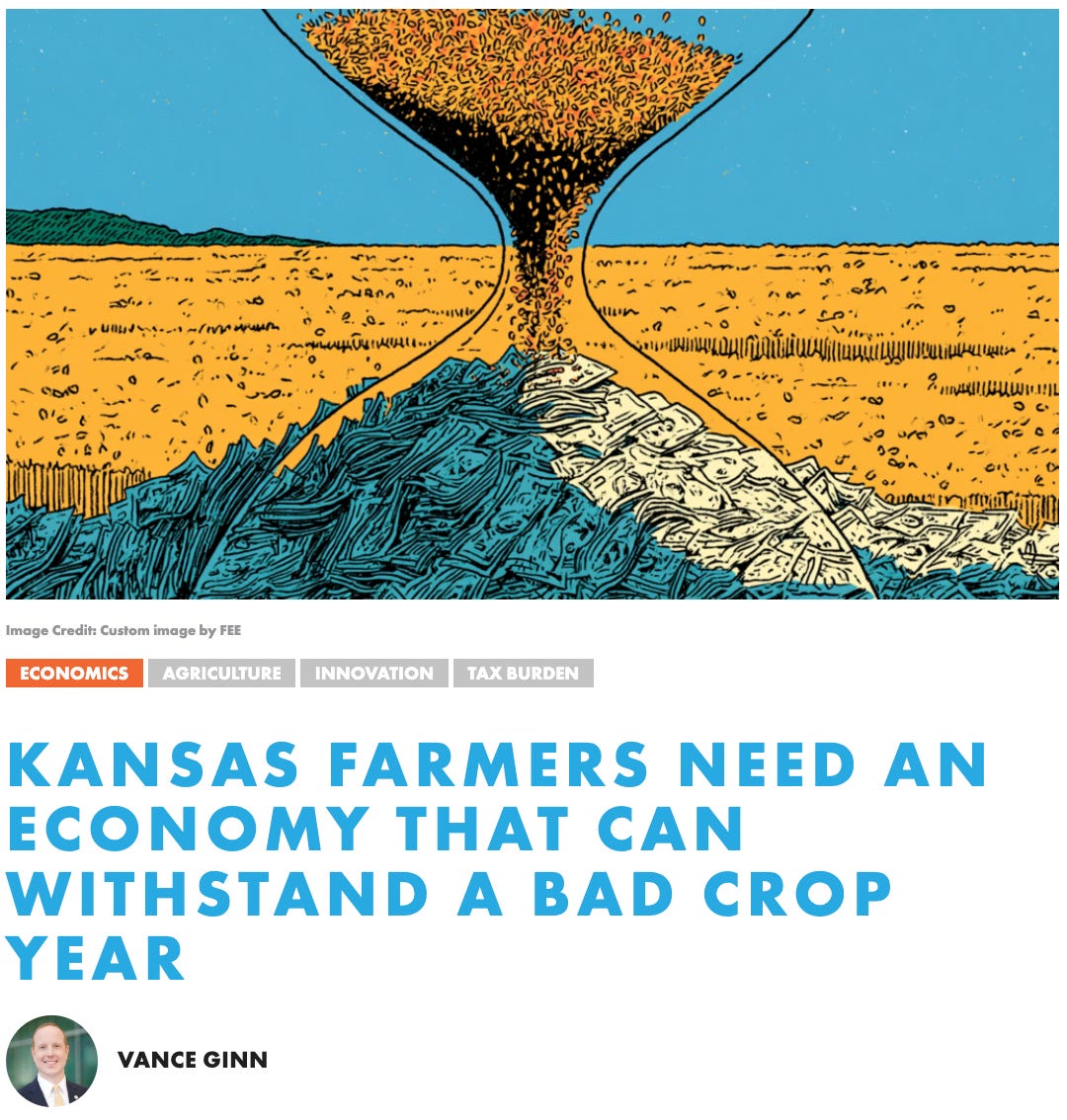
Kansas should protect agriculture by making the state more competitive for industries around agriculture: energy, logistics, processing, technology, manufacturing, housing, health care, and entrepreneurship. My commentary is shared at Foundation for Economic Education.
Kansas should also stop mistaking subsidies for strategy. Ribbon cuttings may generate headlines, but targeted incentives rarely produce lasting prosperity. The best economic development policy is a competitive business climate that allows all firms to succeed, I write at Kansas Policy Institute.
And, as a new Kansas state audit shows, taxpayers have paid a steep price for property tax exemptions. These political carve-outs don't reduce the cost of government — they simply shift the tax burden from politically favored groups to everyone else.
Michigan is feeling the consequences of spending that has grown beyond a sustainable path. Policymakers should reduce excess spending, limit future growth to population growth plus inflation, review programs expanded with temporary funding, and use budget surpluses for reserves and permanent tax relief.
According to the Fraser Institute’s Economic Freedom of North America report, Texas ranks fourth in economic freedom among the states. That's encouraging, but the data also highlights where Texas can improve. Excessive spending and high property taxes continue to weigh on the state's long-term competitiveness and economic freedom.
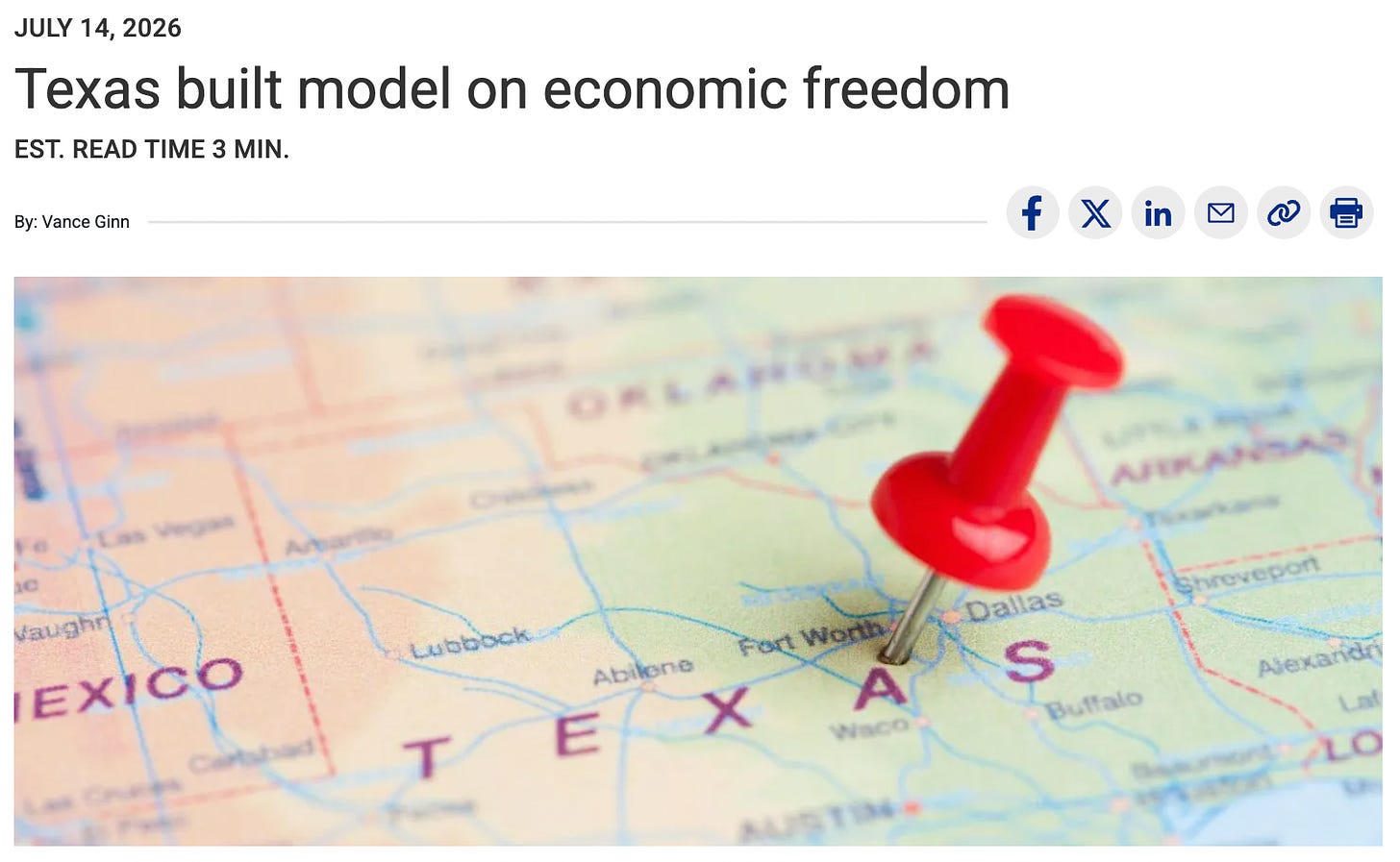
Speaking of Texas, The Center Square quoted me on Toyota's reported $3.6 billion investment and 2,000 new jobs. The investment is welcome news, but the incentive package is the wrong approach. Lasting prosperity comes from broad-based policies—lower taxes, responsible spending, and less regulation—not government picking winners and losers.

Finally, we can't wait until Social Security reaches a crisis point. On WOAI and KTRH Newsradio, I warned that policymakers can no longer bury their heads in the sand. The sooner we reform Social Security to restore solvency and give Americans more ownership over their retirement savings, the better prepared future generations will be.


2. Social Media, AI, and Data Centers
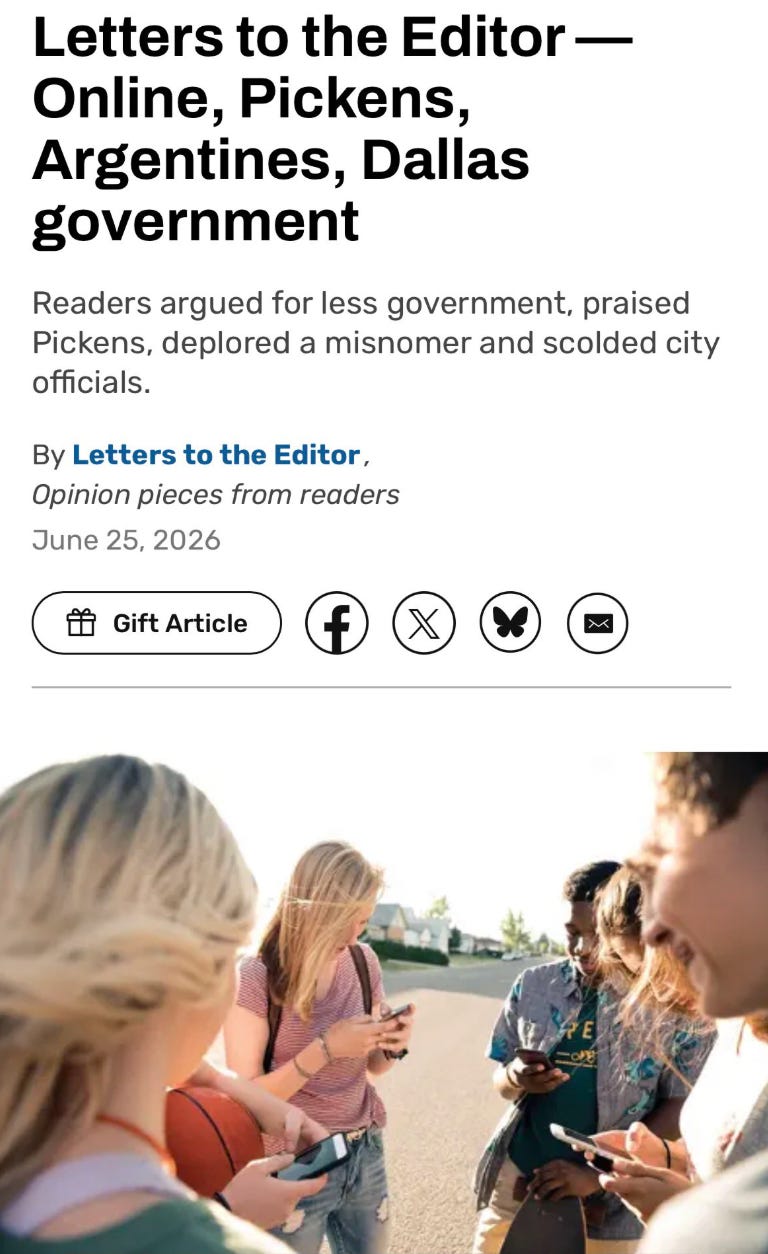
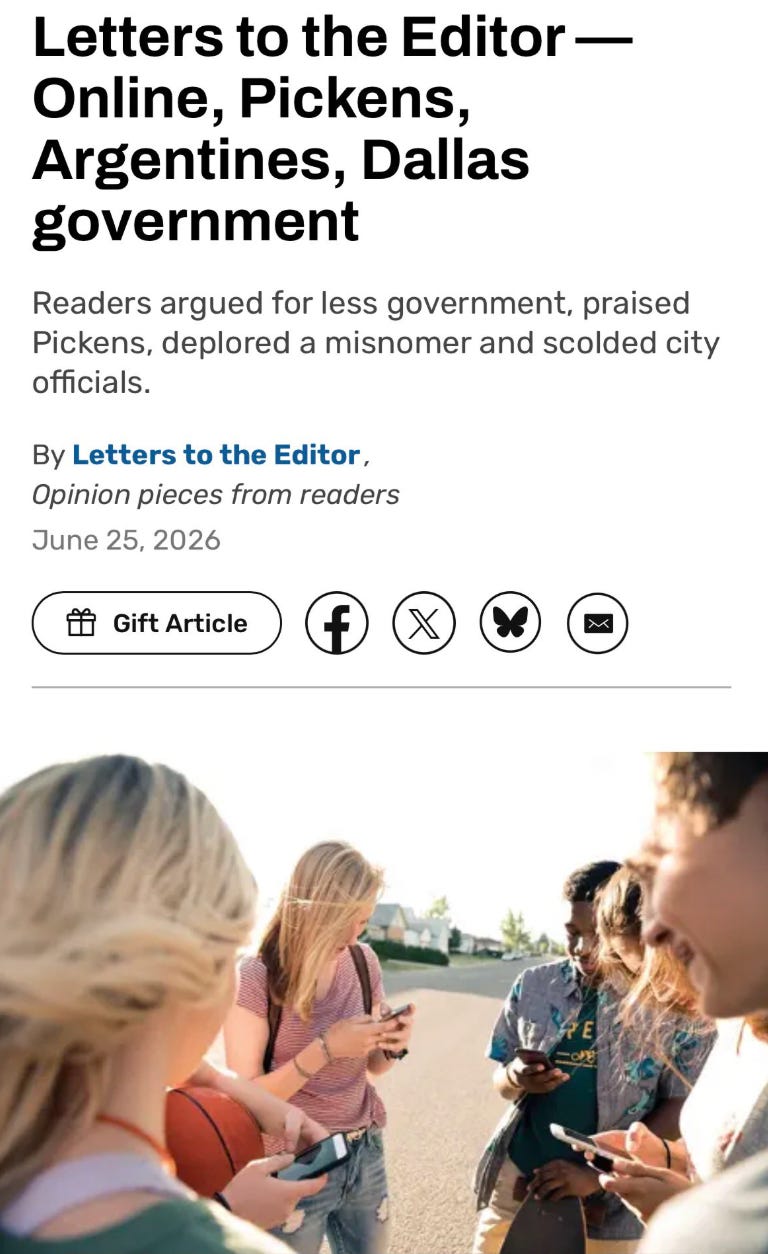
Parents — not government bureaucrats — should decide what their children access online. In my letter to the Dallas Morning News, I argue that families are best positioned to make these decisions, while government should focus on protecting freedom and enforcing the law.
The debate over AI data centers is really a test of whether America still believes in building. Data centers are far more than warehouses full of servers — they are the infrastructure powering artificial intelligence, cloud computing, cybersecurity, logistics, finance, medical research, education, and the next generation of economic growth. If America refuses to build them, China won't wait for us.

Reports that OpenAI discussed giving the federal government a 5% equity stake tied to AI infrastructure point in exactly the wrong direction. Government's role is to protect property rights, enforce contracts, uphold the rule of law, and foster competition — not take ownership stakes in America's most important emerging companies.
RealClear Policy also featured my recent This Week's Economy episodes on why free societies innovate more and why data centers are critical to America's economic future.




3. Wealth and Prosperity
In The Daily Economy, I compare two recent reports that make the same fundamental mistake: treating economic growth as an obstacle to justice rather than the force that has lifted billions of people out of poverty and expanded opportunity around the world.

When headlines proclaimed Elon Musk as the world's first trillionaire, many assumed his wealth must have come at everyone else's expense. But prosperity isn't a fixed pie with only so many slices. If it were, America would have run out long ago. RealClear Politics shared my article explaining why wealth creation expands opportunities for others rather than diminishing them.
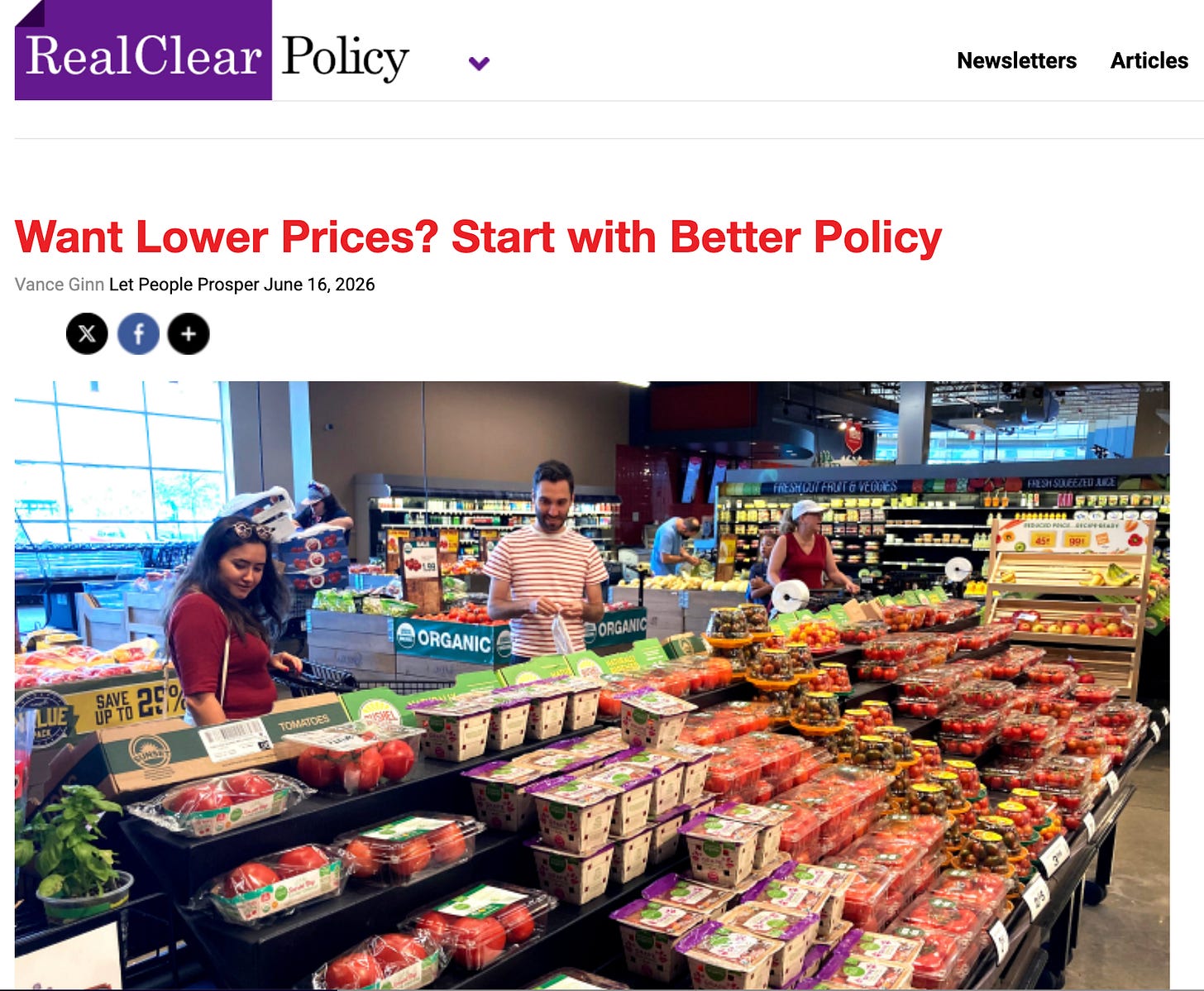
While some debate wealth inequality, many families are simply trying to keep up with the rising cost of living. RealClear Politics also featured my recent This Week's Economy episode on why affordability improves when competition, entrepreneurship, and innovation are allowed to flourish.
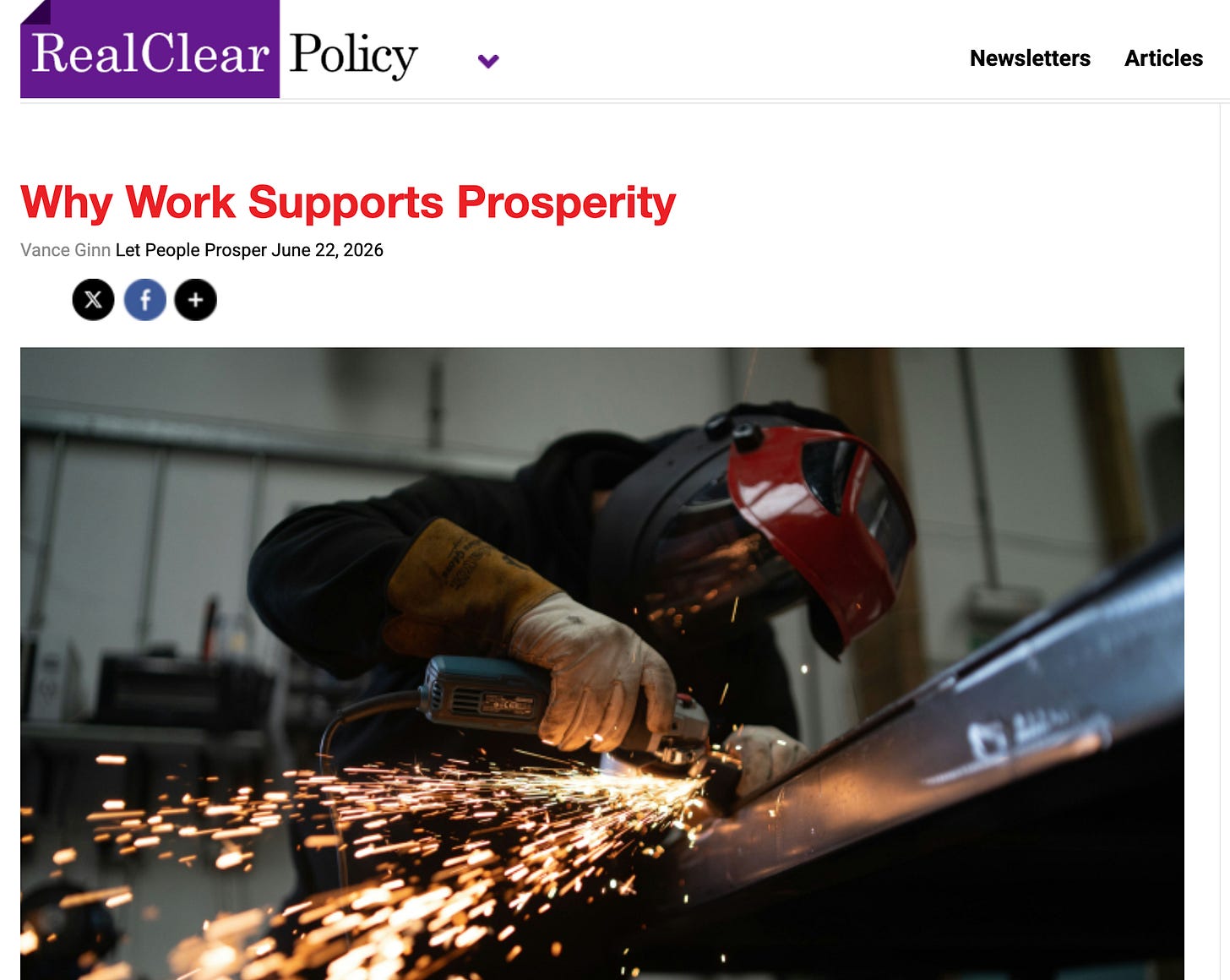
One of the surest paths to prosperity is work. Employment provides more than a paycheck — it offers dignity, purpose, valuable skills, and opportunities to build relationships. In another This Week's Economy episode shared by RealClear Politics, I explain why removing government barriers to work helps more Americans earn, save, and build wealth.
Finally, I rebuilt a recent global living standards comparison using the OECD's Actual Individual Consumption per capita measure, which better answers the question that matters most to families: How well do people actually live?


4. Mergers and Market Management
The proposed merger between Union Pacific and Norfolk Southern would create the nation's first single-line transcontinental freight railroad. Because railroads move the food we eat, the cars we drive, and the materials used to build our homes and businesses, this decision matters far beyond the rail industry. In the Washington Examiner, I argue that regulators should focus on the question that matters most: Will consumers be better off?
My new policy brief, A Consumer-Welfare Framework for Media Competition, Mergers, and Government Barriers, argues that today's media landscape is an attention market, not a traditional broadcast market. I outline three principles that should guide policymakers as they evaluate media mergers, competition, and regulation.
Washington should also resist the temptation to manage markets it cannot fully understand. The proposed Protect College Sports Act would create new federal rules governing NIL, athlete transfers, antitrust protections, and more. While college athletics clearly needs reform, a dysfunctional market doesn't become healthier simply because Congress takes control. The better approach is to remove barriers to competition and let better institutions emerge.


5. Faith, Freedom, and Family
Fatherhood is more than a title — it's a calling. I share reflections on raising my three children, the lasting influence of my own father, and the lessons that continue to shape my life.
As our family prepared to move into a new home, I reflected on the blessings God has entrusted to us and the responsibilities that come with them. Gratitude and stewardship go hand in hand.
Celebrating Independence Day reminded me that the Declaration of Independence recognizes our rights as coming from our Creator — and that government's purpose is to protect those rights, not grant them. Freedom is a precious inheritance that each generation must preserve.


6. Addressing Health Care Access & Costs
Several states are attempting to lower health care costs by telling pharmacy benefit managers (PBMs) how they can operate. In the Washington Examiner, I argue this approach misdiagnoses the problem. Rather than addressing our broken and overly complicated health care system, policymakers are blaming private business models for distortions created by government.
Texas has an opportunity to lead on health care affordability by restoring market competition, empowering patients, and strengthening the patient-doctor relationship — not by repeating Tennessee's costly mistake of forcing private health care companies to unwind longstanding business arrangements. I explain why in The Center Square.

I also examine Kansas' hospital funding crisis for the Kansas Policy Institute. Kansas now has more rural hospitals at immediate risk of closure than any other state. Protecting access to rural health care is essential, but lasting solutions require reforms that address the underlying financial challenges rather than simply spending more.

Health care costs continue to rise while access becomes increasingly difficult. On Quad Cities News, Dr. Deane Waldman and I discuss our new book and why putting patients back in control is the key to making care both more affordable and more accessible.



7. Rising Prices and Affordability
Why are grocery prices still rising? Is it simply corporate greed? As I discuss with Jimmy Barrett on KTRH Newsradio, the answer is far more complex. Geopolitical conflict has driven up the cost of fertilizer and other key inputs, raising production costs that eventually show up in the prices families pay at the grocery store.

What I’m Learning
Abundance Institute: An insightful overview of the benefits and tradeoffs of data centers and why they matter for America's future.
The Economist: Interesting exploration of how artificial intelligence is reshaping five creative professions.
Committee for a Responsible Federal Budget: A helpful explainer on how states use intergovernmental transfers (IGTs) to finance Medicaid supplemental payments.
Capital Record: David Bahnsen offers a thoughtful response to J.D. Vance's argument that conservatives need less Milton Friedman and more Alexander Hamilton.
The Daily Economy: How temporary federal aid allowed many states to postpone difficult fiscal decisions—and why that bill is now coming due.
NetChoice: Why legislation written for the internet of 2020 is poorly suited for the AI-driven digital economy of today.
American Consumer Institute: Interesting report examining the research on social media's impact on teen mental health.
The Economist: A good overview of why political opposition to data centers often ignores the facts about their economic importance.
International Liberty: Dan Mitchell explains why class-warfare tax policies are gaining support on the left — and now among some Republicans.
News 9 ABC: A story from Bradley County, Tennessee, highlights why property taxes have become one of America's biggest affordability challenges.
Economic Forces: If you've been meaning to read more Thomas Sowell, this article offers plenty of reasons to start.
Cato Institute: The Department of Agriculture's latest SNAP report found $10.1 billion in improper payments, underscoring the need for better accountability.
Taxpayers’ Protection Alliance: Explore this interactive map showing data center electricity and water use across the country.
Books I’m Reading:
With two boys in soccer, it’s a big part of life in the Ginn household. The World Cup was the perfect excuse for a little reading up on the sport. I recently finished How to Watch Soccer Like a Genius by Nick Greene. Highly recommend!


Let People Prosper Show Podcast
The Let People Prosper Show features deep discussions on hot topics:
Episode 207 (Thursday):
In this week’s episode of the Let People Prosper Show, I’m joined by Cato Institute’s Ryan Bourne to discuss American’s frustrations around affordability. He explains how price controls, subsidies, zoning, licensing, and other government barriers restrict supply and raise costs. We discuss why prices are signals, why political quick fixes often backfire, and what a real affordability agenda should include.
Episode 208 (Next Thursday):
Joining me next week is Lauren Hall, Professor of Political Science and Associate Dean at the Rochester Institute of Technology. At a time when too much of politics has become left versus right, us versus them, and win versus lose, Lauren offers a different path. We will discuss her framework of radical moderation and how it helps us to embrace nuance, make better decisions, and reduce conflict.
Did you miss This Week’s Economy episode 172?
Quote of the Week


Bible Verse of the Week

Thank you for supporting my mission to promote economic freedom and prosperity. I hope this edition of Prosperity Pulse keeps you informed, inspired, and ready for the days ahead.
Please subscribe (get a paid subscription!) to this newsletter today, become a paid subscriber, and share it with your staff, family, and friends. Get more of my work at Ginn Economic Consulting at vanceginn.com.